The Cause of Roof Water Overflow during Rain (And the Solution of Gutters)



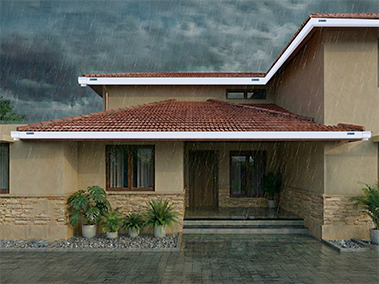
Climate change is no longer a distant concern. Indian homeowners are already experiencing its impact through heavier rainfall, unpredictable storms, and shorter but more intense monsoon spells. What once worked for decades is now being tested like never before – especially something most people overlook until it fails: the gutter system.
If your home still relies on older metal or low-capacity gutters, it may not be prepared for today’s climate realities. The question is no longer whether heavy rain will come, but whether your gutters can manage it.
Weather patterns across India are changing rapidly. Meteorological data shows a steady rise in short-duration, high-intensity rainfall events. Instead of steady showers, many regions now experience sudden cloudbursts that release massive volumes of water in a short time.
What this means for homeowners is simple. Gutters designed for older rainfall patterns are no longer enough.
Your gutter system must now handle peak loads at any time of the year.
For years, galvanized steel, mild steel, aluminium, and cast iron gutters were considered strong and reliable. Under today’s climate stress, their weaknesses are becoming clear.
Metal gutters weaken with every extreme weather event. When the heaviest rain arrives, that weakness often turns into overflow, leakage, or complete failure.
Traditional gutters may seem affordable at first, but their long-term cost tells a different story.
Over time, these repeated expenses often exceed the cost of replacing the system with a modern alternative.
Most older homes use standard 5-inch gutter systems. These were designed for normal rainfall, not today’s extreme downpours.
When rainfall intensity increases, undersized gutters cannot drain water fast enough. The result is overflow.
If your gutters overflow even during moderate rain, it is a clear sign that capacity is no longer sufficient.
Small issues during dry months often become major problems once heavy rains start.
As climate conditions intensified, gutter technology evolved for a reason. Modern uPVC gutter systems are designed to handle extreme weather, not historical averages.
Unlike metal, uPVC does not weaken after repeated exposure to rain, heat, and humidity.
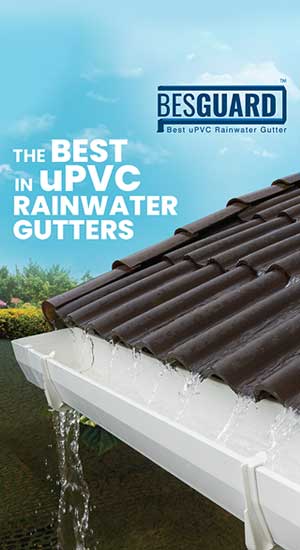
Besguard gutter systems are engineered specifically for India’s high-rainfall, high-heat environment. Every design choice reflects real climate conditions.
This is not a modified foreign system. It is purpose-built protection for Indian homes facing unpredictable weather.
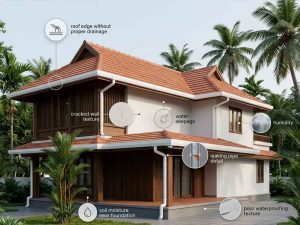
In regions with heavy rainfall, strong winds, and long monsoon seasons, gutters are not optional accessories. They are a critical defense system.
A well-designed gutter system protects:
When gutters fail, the cost of damage often extends far beyond the gutter itself.
Climate change is intensifying. Tomorrow’s storms will be tougher than yesterday’s. Choosing a gutter system designed for the future is no longer a luxury – it is a necessity.
Besguard uPVC gutter systems offer:
If your current gutters are old, undersized, or showing signs of wear, now is the right time to act before the next heavy downpour turns a small issue into a costly repair.