
.jpeg)
The first dark clouds of the monsoon often bring relief from the scorching summer heat. But for homeowners across Kerala, there is also an important question:
Is your home truly ready for the months of heavy rain ahead?
Every year, thousands of families face unexpected leaks, damp walls, peeling paint, flooded compounds, and costly structural repairs during the monsoon season. Most of these problems are not caused by extraordinary weather. They occur because small maintenance issues go unnoticed until heavy rainfall exposes them.
The good news is that most monsoon-related damage is preventable. With proper preparation and a reliable rainwater management system, homeowners can protect their property, avoid expensive repairs, and enjoy the rainy season with confidence.
Kerala receives some of the highest rainfall levels in India. In recent years, changing climate patterns have resulted in:
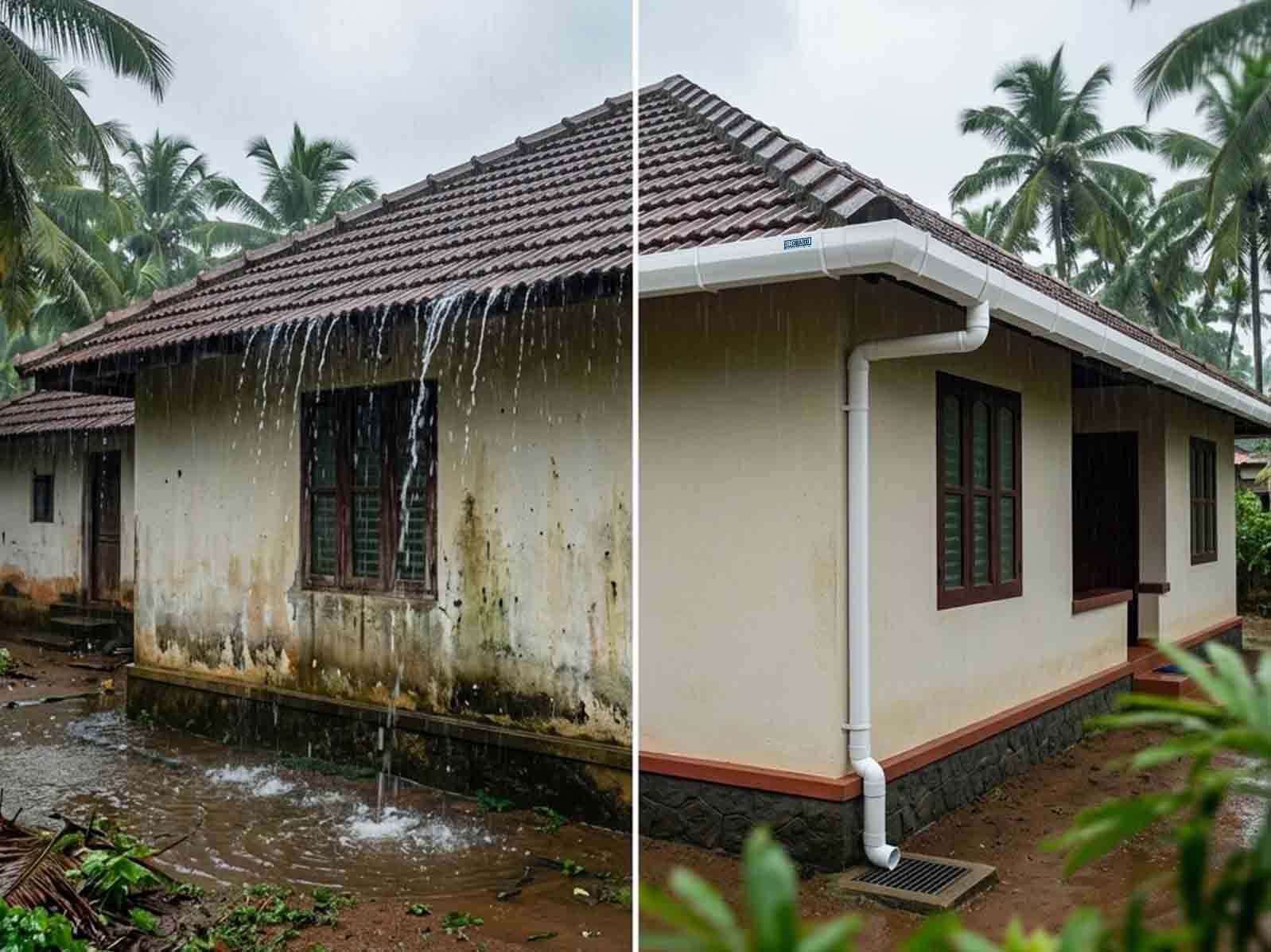
A single heavy shower can release thousands of litres of water onto your roof within minutes. If that water is not efficiently collected and redirected, it can quickly become a threat to your home's structure.
Your roof serves as the first line of defense against the monsoon.
Look for:
Even a tiny crack can allow water to enter the structure and create major problems over time.
A pre-monsoon inspection can help identify weak points before they become expensive repairs.
One of the most common causes of monsoon damage is blocked gutters.
During summer, roofs accumulate:
When rain begins, these materials wash into the gutters and create blockages.
Once the channel becomes clogged:
Regular gutter cleaning ensures smooth water flow throughout the season.
Many traditional gutter systems are unable to handle Kerala's intense rainfall.
Common problems include:
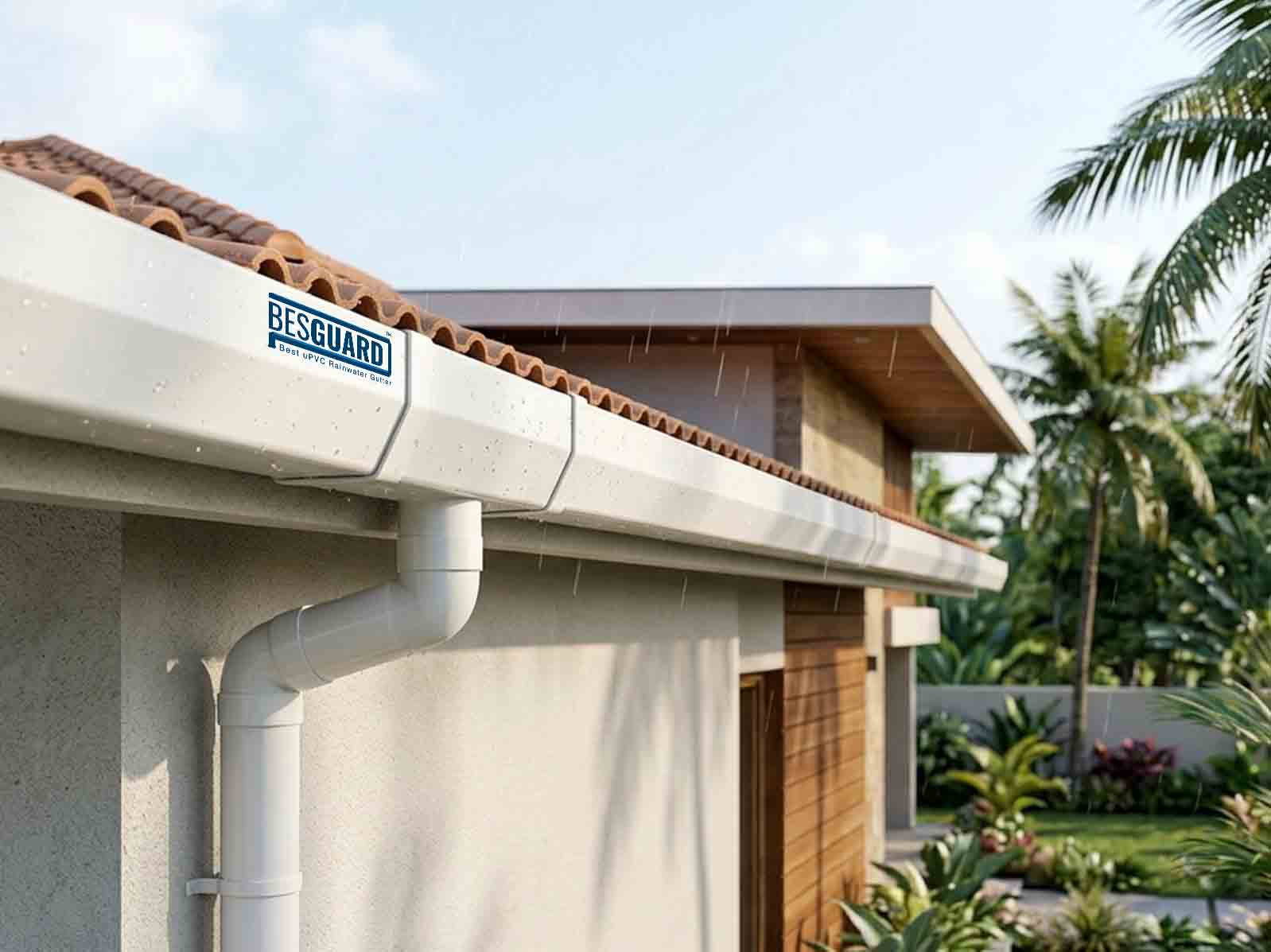
Modern uPVC rainwater gutter systems provide a much more reliable solution.
Premium systems such as Besguard's engineered gutters feature:
A wider opening captures more rainwater while the deeper base accelerates water flow toward downspouts.
Internally reinforced ribs maintain structural strength even under heavy water loads.
Heavy-duty sealing systems help prevent leakage caused by thermal expansion and contraction.
These features make a significant difference during extreme monsoon conditions.
Many homeowners only notice wall damage after the monsoon is well underway.
Before the season begins, inspect for:
These signs often indicate previous water intrusion.
Repairing minor issues now is far less expensive than dealing with major structural damage later.
The foundation is often the most overlooked part of monsoon protection.
When rainwater falls directly around the house perimeter:
A proper rainwater management system should move water safely away from the building.
Ensure all downspouts discharge into:
Never allow water to collect directly beside your walls.
Monsoon preparation isn't only about protection.
It is also an opportunity to conserve water.
A well-designed rainwater harvesting system can:
By connecting your roof drainage system to a storage tank or recharge well, you can make productive use of Kerala's abundant rainfall.
Modern monsoons bring more than just vertical rainfall.
Strong winds can force water sideways against walls, windows, and roof edges.
To improve protection:
Homes designed for extreme weather conditions experience significantly fewer monsoon-related problems.
Before the rains arrive, make sure you:
✅ Inspect your roof
✅ Clean gutters and downspouts
✅ Repair wall cracks
✅ Test drainage pathways
✅ Check foundation discharge points
✅ Trim overhanging tree branches
✅ Inspect gutter joints and brackets
✅ Consider rainwater harvesting options
The monsoon is a beautiful part of life in Kerala, but it also places tremendous stress on homes. The difference between a safe, dry home and a costly repair project often comes down to preparation.
By inspecting your property, maintaining your drainage system, and investing in high-quality rainwater management solutions such as Besguard's advanced uPVC gutter systems, you can protect your family, property, and peace of mind throughout the season.
This monsoon, don't wait for the first leak to take action. Prepare today and ensure your home remains strong, dry, and resilient no matter how heavy the rain becomes.