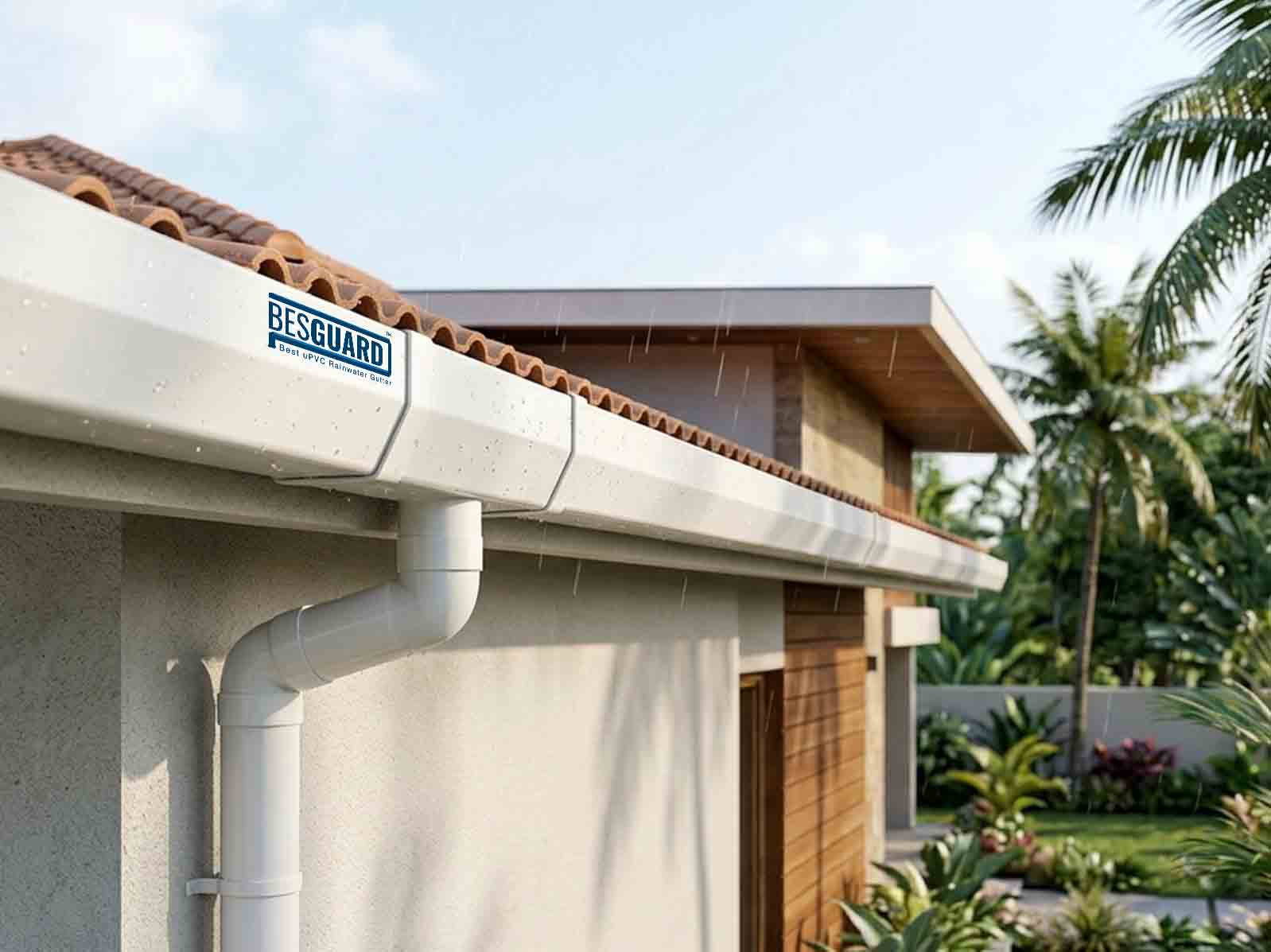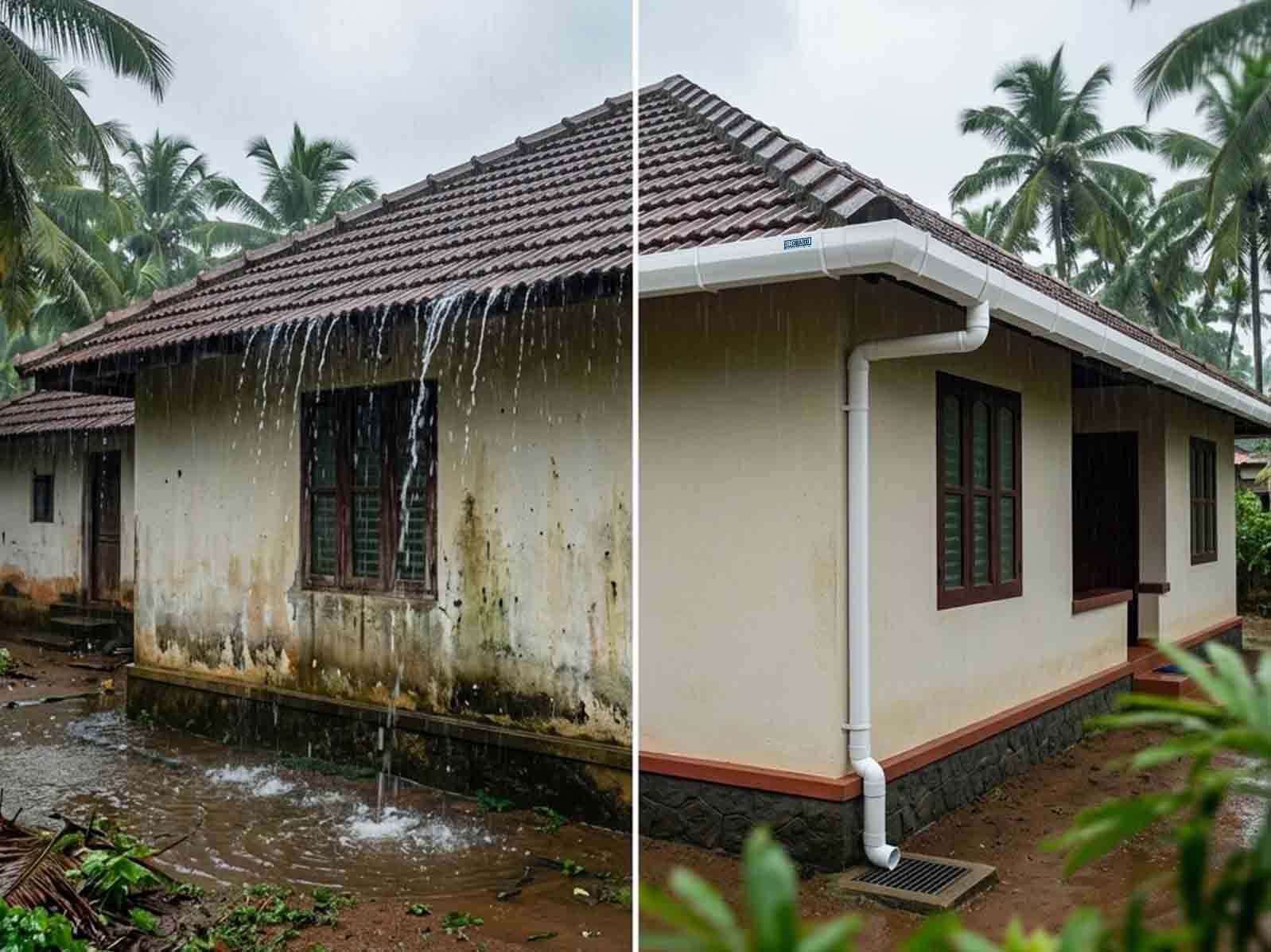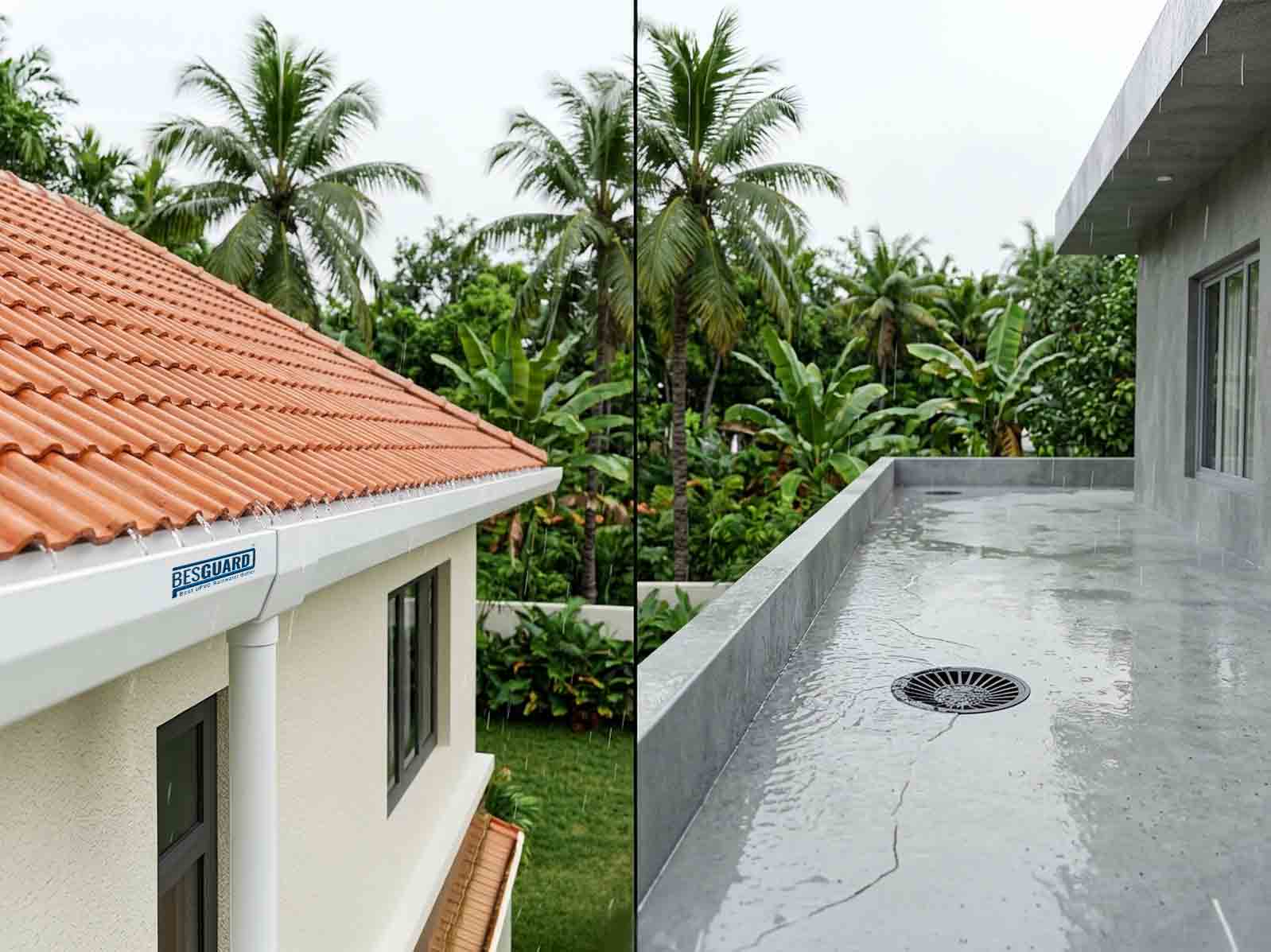

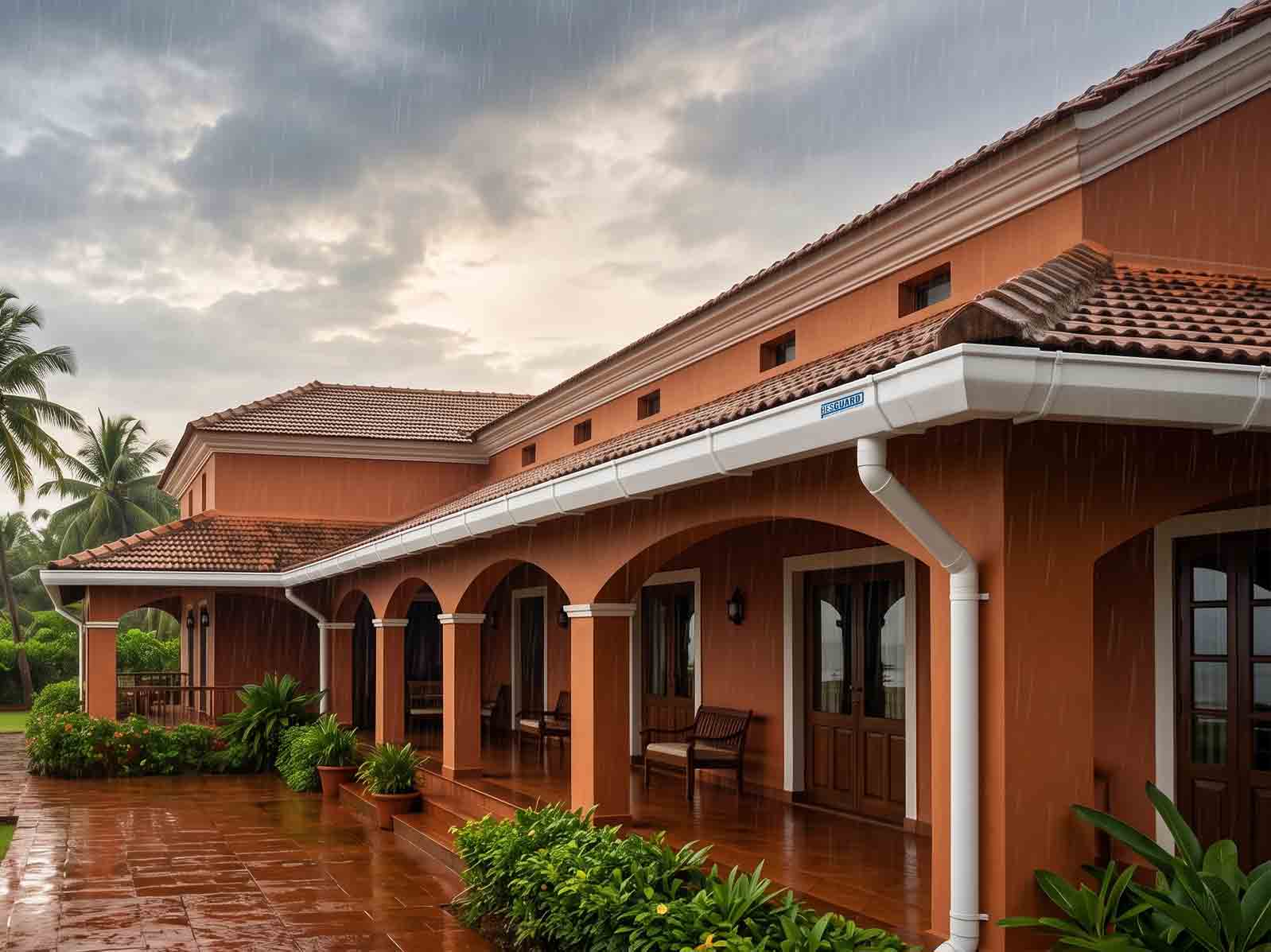
The best rainwater gutter for Goa's monsoon climate is a high-capacity, fortified uPVC gutter because it resists coastal salt-air corrosion, handles Goa's intense 3000+ mm annual rainfall, and never rusts - unlike metal, which corrodes fast near the sea. For Goa's heavy, wind-driven monsoon, capacity is critical: Besguard's uPVC gutters come in 165 mm and 225 mm profiles carrying 16 and 20 litres per metre, with the 225 mm profile suited to larger and steeper coastal roofs.
Goa's monsoon is not gentle. Between June and September, the state receives some of the heaviest rainfall on India's west coast, driven sideways by strong winds off the Arabian Sea. Add year-round coastal salt air and high humidity, and you have a climate that destroys the wrong gutter system within a few seasons.
This guide explains what makes a rainwater gutter suitable for Goa specifically, and why fortified uPVC has become the practical choice for homes along the coast.
Goa's climate demands a corrosion-proof, high-capacity gutter because it combines heavy monsoon rainfall, strong sea winds that drive rain sideways, and constant coastal salt air that rusts metal quickly. A gutter that works inland will fail here.
Goa's specific challenges:
A gutter for Goa has to handle volume, catch angled rain, and survive salt - all at once.
The best gutter material for Goa is fortified, UV-stabilised uPVC, because it does not rust or corrode in salt air, resists intense coastal sun, and needs minimal maintenance. This matters more in Goa than almost anywhere, because salt air is so aggressive toward metal.
How the options hold up in Goa's coastal climate:
uPVC - completely rust-proof and corrosion-free. Salt air simply does not affect it chemically. UV-stabilised, lightweight, long-lasting (25+ years). The clear choice for coastal Goa.
GI/metal gutters - rust quickly in salt air, often within a few years near the sea. Need constant repainting, develop joint leaks, and fail early. A poor choice for the coast.
Concrete - cracks over time, grows algae in humidity, and is heavy and hard to repair.
For a home anywhere near the Goa coast, uPVC is not just better - it's the only material that ignores salt air entirely.
Capacity is critical in Goa because the monsoon delivers huge volumes of water in short, intense bursts, and an undersized gutter overflows exactly when it's needed most. Water-carrying capacity - measured in litres per metre - is the specification that matters.
Besguard's profiles are sized for this:
Goa's wind-driven rain makes profile width matter too. A wide-mouthed, high-capacity profile catches angled rain that a narrow round gutter would miss - so the water ends up in the gutter, not on the wall.
Choose a Goan gutter based on roof area, roof pitch, rainfall intensity, and salt exposure - prioritising a corrosion-proof material and high capacity. Coastal homes should always specify uPVC over metal.
Key factors:
Yes. With Goa's abundant monsoon rainfall, connecting gutters to a harvesting system lets homeowners store large volumes of water for the dry season. Gutters collect roof runoff and channel it through downpipes into storage tanks or recharge pits.
Given how much rain Goa receives in four months, a harvesting-connected gutter system turns the monsoon from a drainage problem into a year-round water resource - valuable in a state where the dry season contrasts sharply with the wet.
Besguard manufactures uPVC rainwater gutter systems engineered for India's coastal and high-rainfall conditions, and supplies across Goa alongside Kerala, Karnataka, Maharashtra, and other states. What makes it suited to Goa:
Goa's monsoon combines heavy rainfall, wind-driven rain, and relentless coastal salt air - a combination that rusts metal gutters and cracks concrete within a few seasons. The best rainwater gutter for Goa is a high-capacity, fortified uPVC system that ignores salt air, handles the volume, and catches angled rain.
Besguard's uPVC gutters, in 165 mm and 225 mm profiles at 16 and 20 litres per metre with IR-Rib reinforcement and a 10-year warranty, are engineered for exactly these coastal conditions. For a Goan home, choosing a gutter built for salt air and monsoon intensity is the difference between protection that lasts decades and repairs that start after the first year.