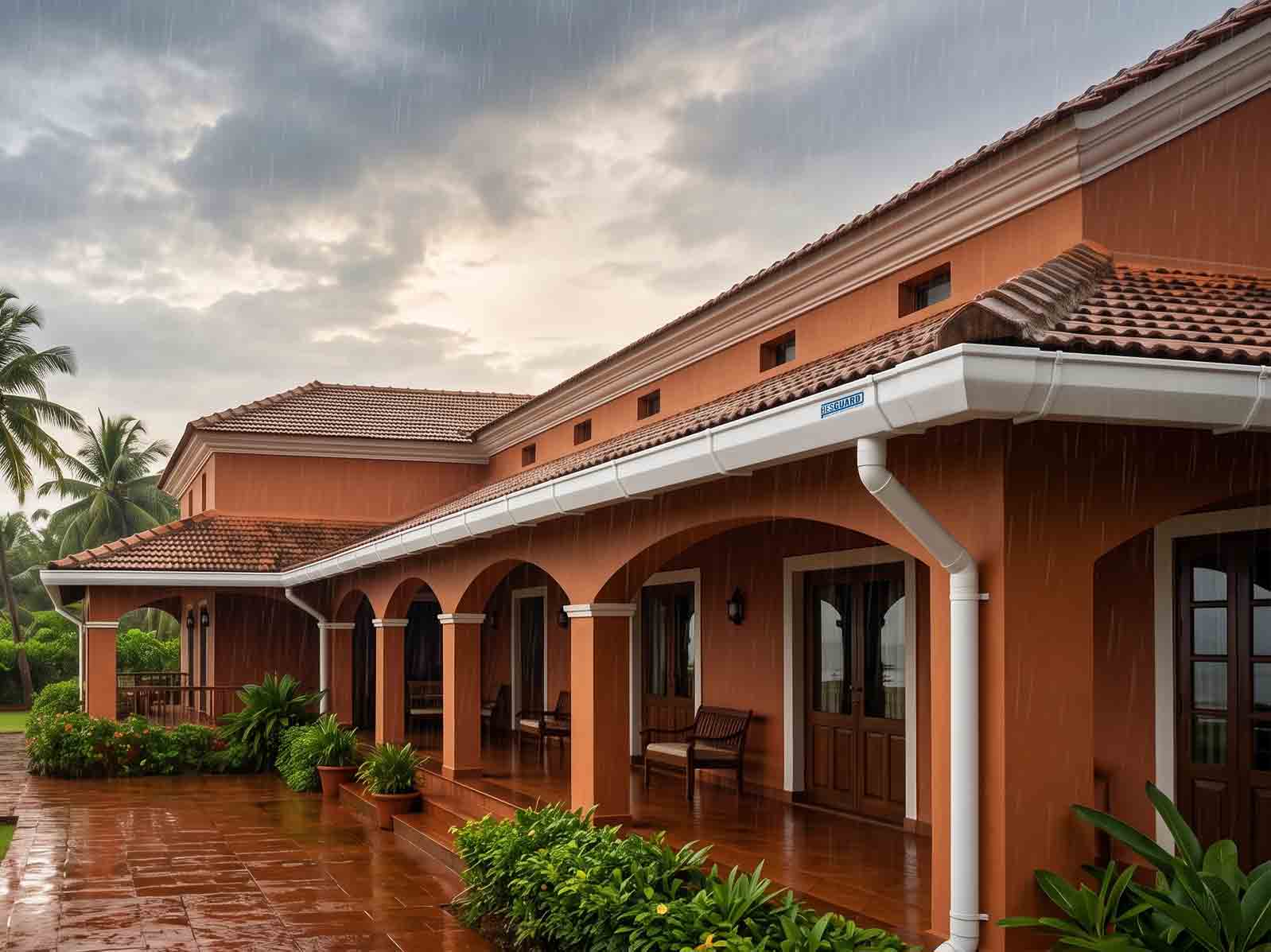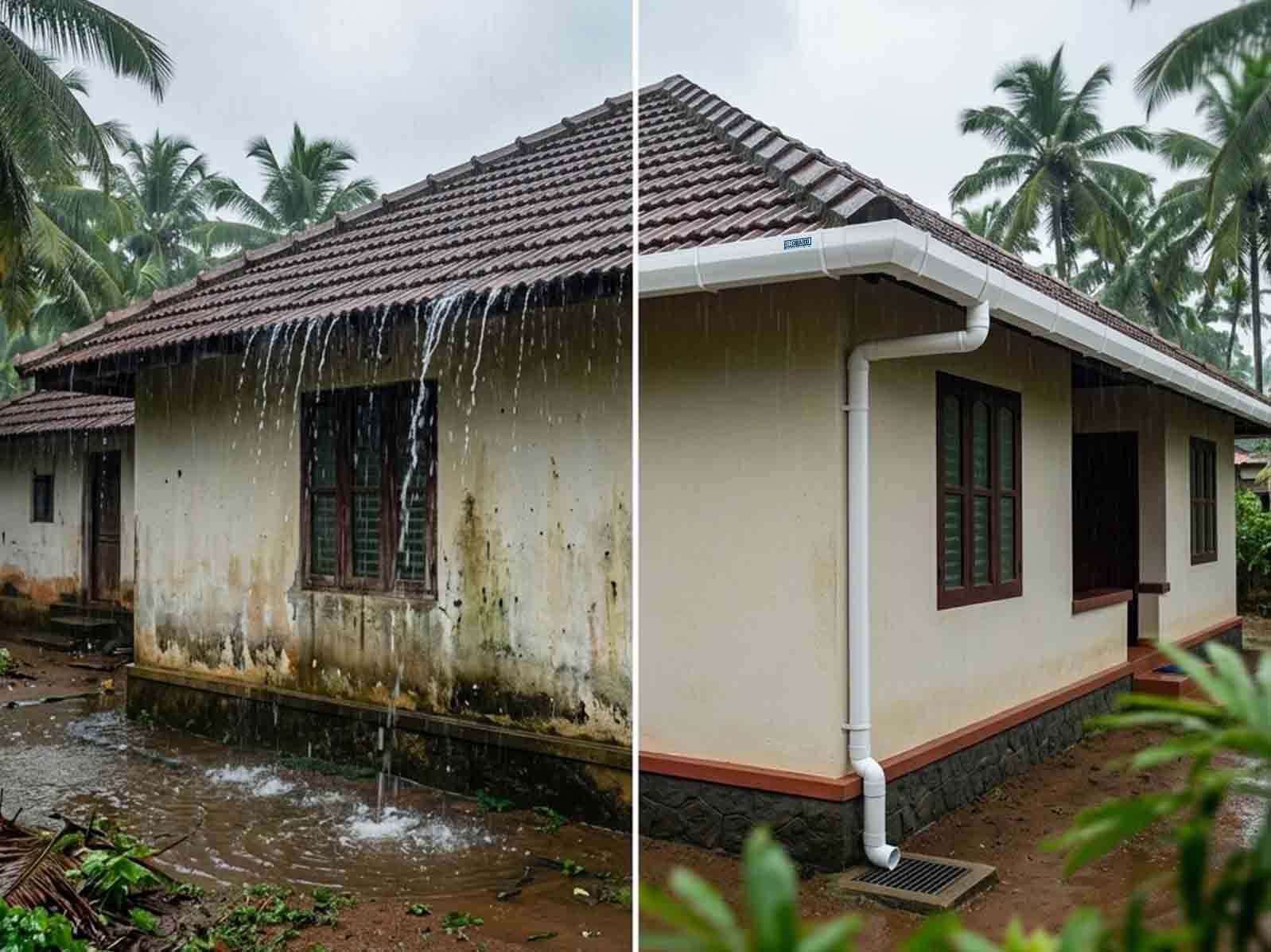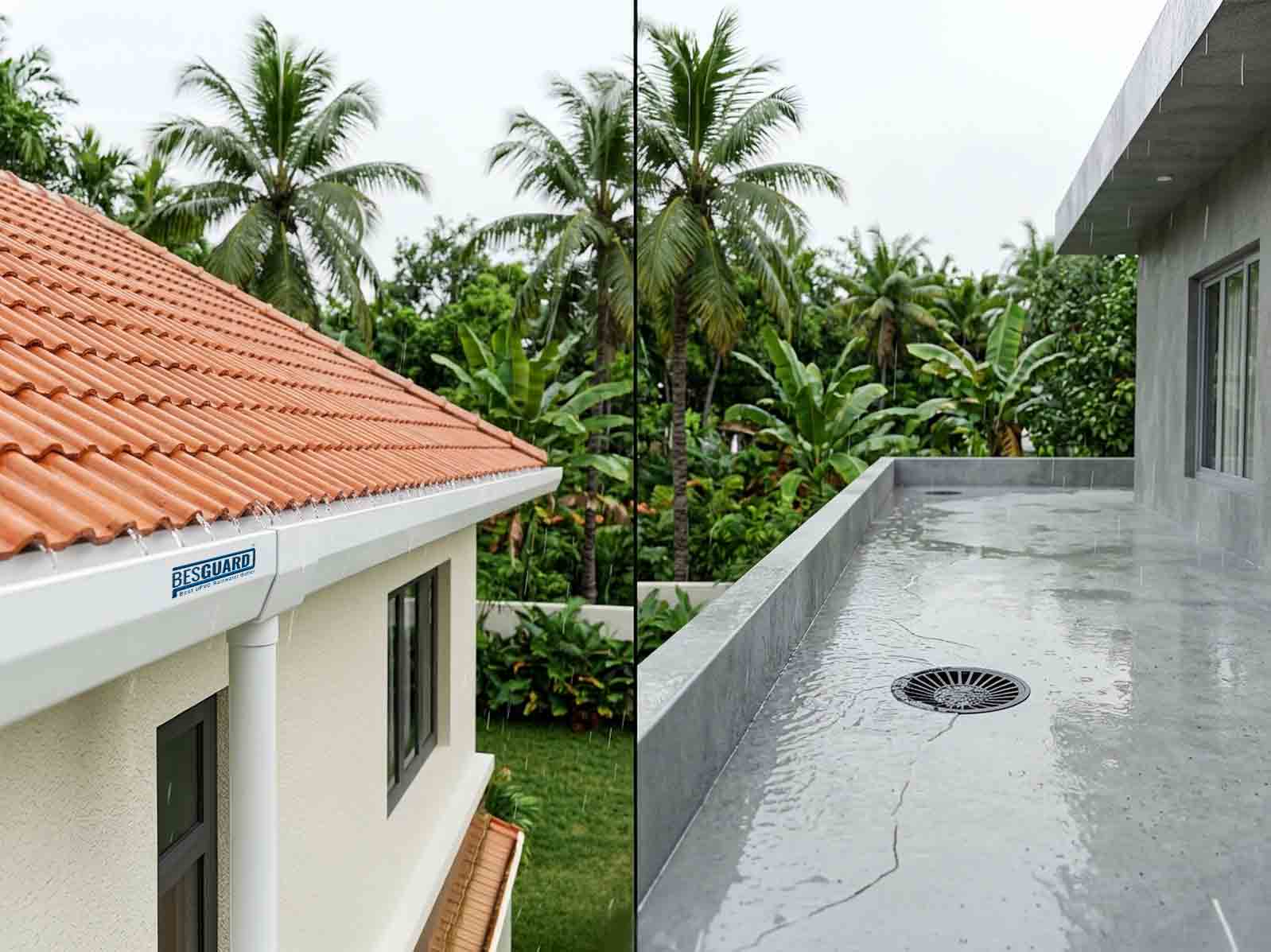

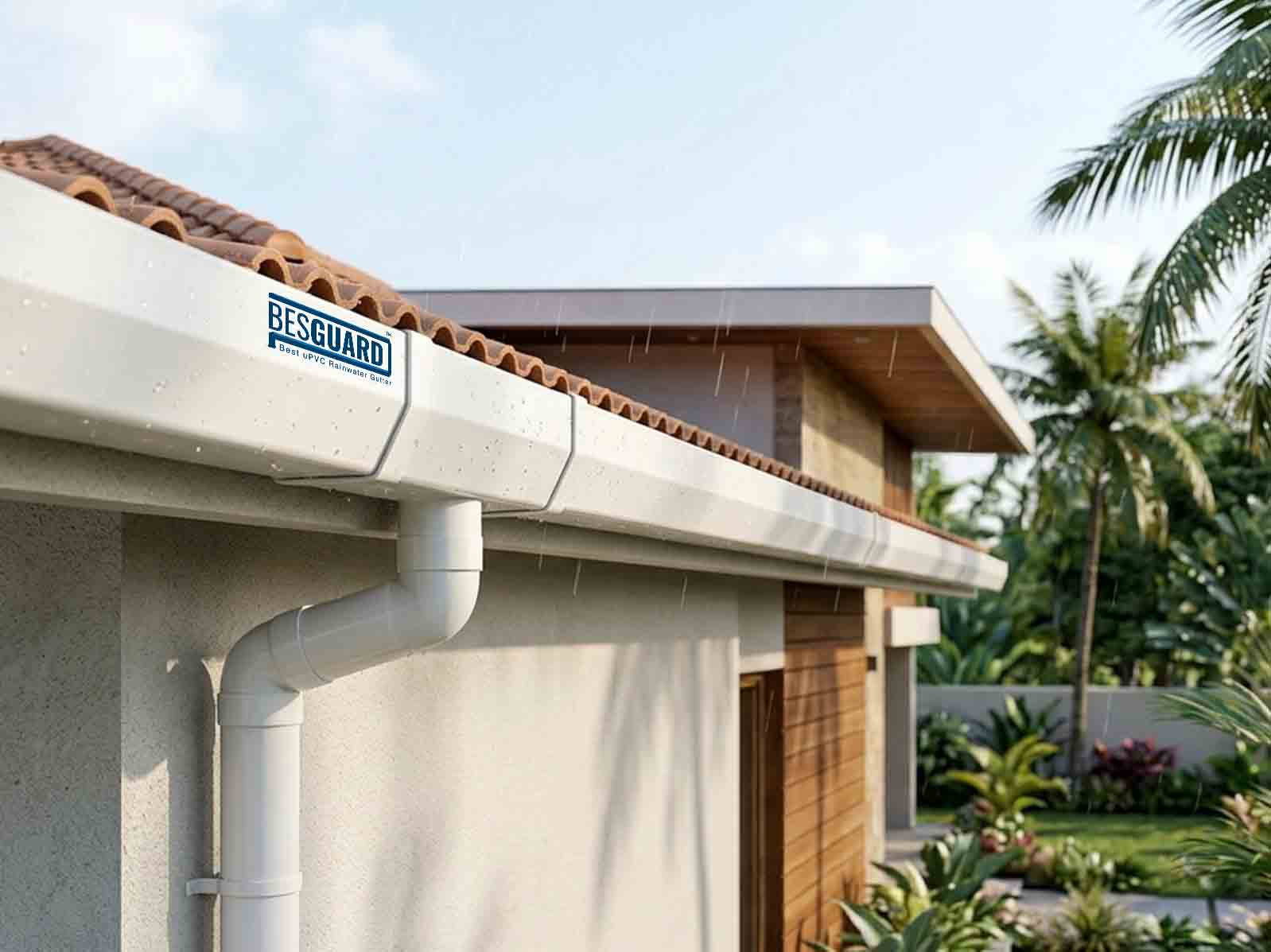
The best rainwater gutter for Indian homes is a UV-stabilised, fortified uPVC gutter because it is rust-proof, lightweight, handles heavy monsoon rainfall, and lasts over 25 years with minimal maintenance - unlike metal, which corrodes, or concrete, which cracks. For high-rainfall and coastal regions like Kerala, capacity matters most: Besguard's uPVC rainwater gutters come in 165 mm and 225 mm profiles with flow capacities of 16 and 20 litres per metre, sized for India's heaviest rain.
Search "best rainwater gutter in India," and every manufacturer claims to be number one. That's not much help when you're trying to protect a home you've spent years building. This guide cuts through the superlatives and explains what actually makes a rainwater gutter the best choice - with real specifications, not slogans - so you can judge any product for yourself.
The best material for a rainwater gutter in India is fortified, UV-stabilised uPVC, because it does not rust or corrode, resists intense sun, handles heavy rainfall, and needs minimal maintenance across India's varied climate.
Here is how the common materials compare for Indian conditions:
uPVC - rust-proof, corrosion-free, UV-resistant, lightweight, and long-lasting (over 25 years). Suits humid, coastal, and high-rainfall regions. The strongest all-round choice.
GI (galvanised iron) / metal - rusts and corrodes, especially in humidity and coastal salt air. Needs repainting, develops joint leaks, and has a short lifespan near the coast.
Concrete - heavy, cracks over time from thermal movement, grows algae and moss in humidity, and is expensive to repair.
Standard PVC - cheap but becomes brittle under UV, cracks under load, and is often mislabelled as uPVC.
For most Indian homes, and especially in high-rainfall states, fortified uPVC wins on every measure that matters.
A rainwater gutter is only the best if it has high water-carrying capacity, structural strength, corrosion resistance, and reliable joints - matched correctly to your roof. The word "best" means nothing without specifications behind it.
Judge any rainwater gutter on these five factors:
If a supplier can't give you a capacity figure, they've sold you a shape, not a system.
uPVC is the best rainwater gutter for Kerala because it resists corrosion from coastal salt air, handles over 3000 mm of annual monsoon rainfall, is UV-stabilised against intense sun, and never rusts - unlike metal or cast iron. Kerala's climate is among the most demanding in India.
Kerala receives rain across two monsoons a year, with high humidity that keeps surfaces wet for months and salt-laden air along its long coastline. Metal gutters rust quickly here; concrete cracks and grows algae. uPVC is immune to all of these, which is why it has become the standard choice for a rainwater gutter in Kerala.
Capacity matters especially here. With rainfall intensity this high, the 225 mm profile at 20 litres/metre is often the right choice for larger or steeper roofs, while 165 mm at 16 litres/metre suits moderate residential roofs.
Choose your rainwater gutter size based on roof area, roof pitch, rainfall intensity, and the number of roof valleys - not on roof area alone. A larger or steeper roof, or one with valleys, needs higher capacity and more downpipes.
As a simple guide:
Roof valleys concentrate water from two slopes into one section and usually need the higher-capacity profile plus a dedicated downpipe. As a downpipe guideline, roofs up to 50 m² need one downpipe, 50 - 100 m² need two, and roofs above 100 m² need three or more.
uPVC lasts longest in India's climate - over 25 years with minimal maintenance - because it does not rust, corrode, or crack. Metal rusts (fast in coastal areas) and concrete cracks over time.
Factor uPVC Metal (GI) Concrete
Rust/corrosion None Rusts None
Cracking No No Cracks over time
Weight Light Medium Heavy
Maintenance Minimal Repainting needed Difficult repairs
Coastal suitability Excellent Poor Moderate
Lifespan 25+ years Shorter Long if uncracked
For India's mix of heat, humidity, and heavy rain - and especially for coastal regions - uPVC is the most durable, lowest-maintenance choice.
The price of a uPVC rainwater gutter depends on the profile size, length, fittings, and installation required. Rather than comparing price per metre alone, compare the complete system - gutter lengths, running outlets, corners, joints, end caps, clamps, downpipes, and installation. A cheaper product that needs frequent repair or early replacement costs more over its life. For an accurate quote based on your roof, contact a manufacturer or dealer directly.
Besguard, from the established house of Besplast, manufactures uPVC rainwater gutter systems engineered for Indian weather, with hundreds of installations across the country. What makes it a genuine contender for the best rainwater gutter in India - backed by specifications, not slogans:
The "best rainwater gutter in India" isn't decided by which brand shouts loudest - it's decided by specifications. A UV-stabilised, fortified uPVC gutter with high water-carrying capacity, internal reinforcement, corrosion resistance, and a real warranty is the best choice for India's climate, and the only sensible one for high-rainfall, coastal regions like Kerala.
Besguard meets that standard with real numbers: 165 mm and 225 mm profiles at 16 and 20 litres per metre, IR-Rib reinforcement, fortified uPVC, and a 10-year warranty, supplied across seven states. When you compare on facts rather than slogans, the best rainwater gutter is the one built and specified for the rain it has to handle.