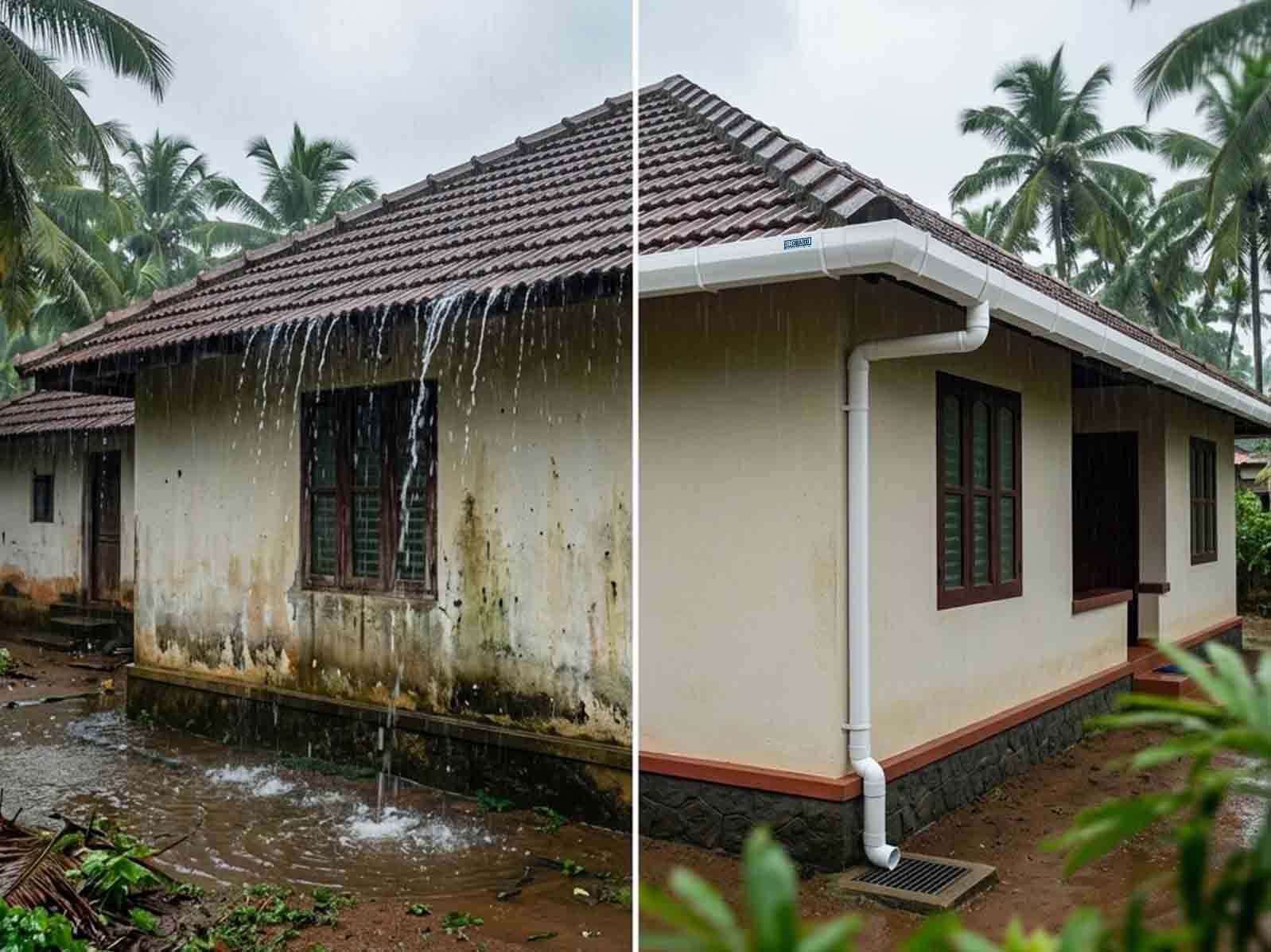

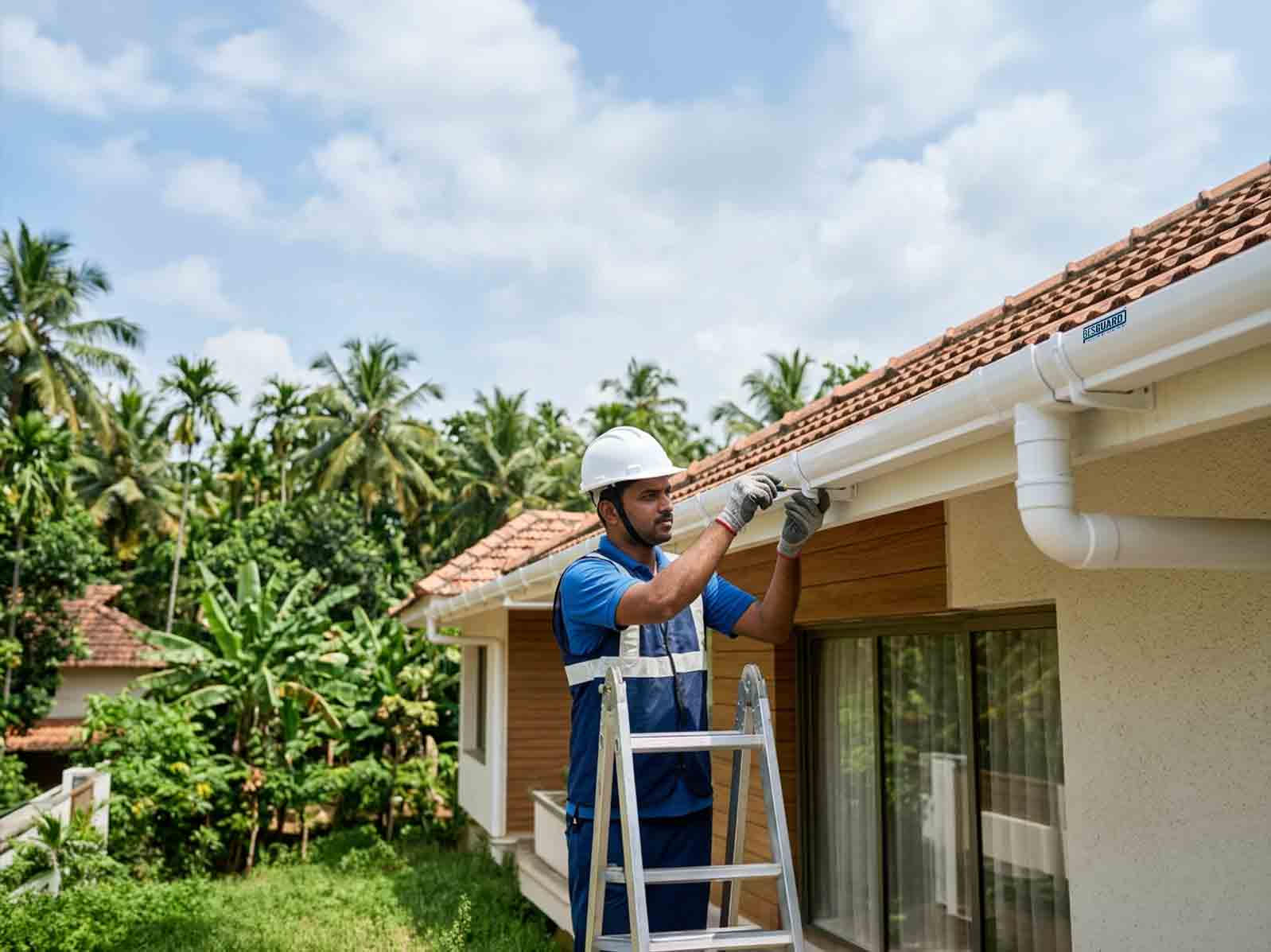
Installing a rainwater gutter system is one of the most effective ways to protect your home from water damage. However, even the highest-quality gutter can fail if it is installed incorrectly. Many homeowners assume that simply attaching gutters to the roof is enough. In reality, incorrect installation can lead to overflowing gutters, damp walls, foundation erosion, mold growth, roof leaks, and expensive repairs.
For homes in Kerala and other high-rainfall regions, proper installation becomes even more important because heavy monsoon rainfall places enormous pressure on the entire rainwater drainage system. This guide explains the most common rainwater gutter installation mistakes and how to avoid them.
One of the biggest installation mistakes is selecting gutters that are too small for the roof.
Large roofs collect huge amounts of rainwater during heavy showers. If the gutter capacity is insufficient, water will overflow instead of draining properly.
Choose a gutter system based on:
For Kerala's heavy monsoon climate, high-capacity uPVC gutters provide better long-term protection.
Many installations fail because only one or two downpipes are installed, even on large roofs.
When too much water enters a single downpipe, it cannot drain fast enough.
Proper downpipe spacing allows water to drain evenly throughout the system.
Rainwater gutters should never be perfectly level.
A slight slope helps water flow naturally toward the downpipe.
If the slope is too small:
If the slope is too steep:
Professional installers calculate the correct gradient for efficient drainage.
Brackets support the entire gutter system.
Incorrect bracket spacing causes gutters to:
Quality gutter systems use strong brackets positioned at recommended intervals to maintain structural stability.
Roof valleys collect rainwater from two roof slopes. During heavy rainfall, these areas receive significantly more water than other roof sections. Installing a standard gutter without additional capacity near valleys often results in overflow. High-flow gutter profiles and additional outlets help manage these concentrated water loads.
Leaking joints are one of the most common causes of water damage. Improperly fitted connectors or low-quality fittings allow water to escape before reaching the downpipe.
Quality fittings provide:
Not all rainwater gutters are designed for India's climate.
Metal gutters may rust.
Concrete gutters may crack.
Inferior plastic gutters can become brittle under UV exposure.
A high-quality uPVC gutter system offers:
Downpipes should direct water away from the building.
Poor positioning can cause:
Proper planning ensures rainwater flows safely into drains or rainwater harvesting systems.
Even maintenance-free gutters require occasional cleaning.
Installations that leave no access for inspection make maintenance difficult.
Always ensure leaves and debris can be removed easily.
Even premium gutter systems can fail when installed incorrectly.
Experienced installers understand:
Professional installation helps maximize the life and performance of the system.
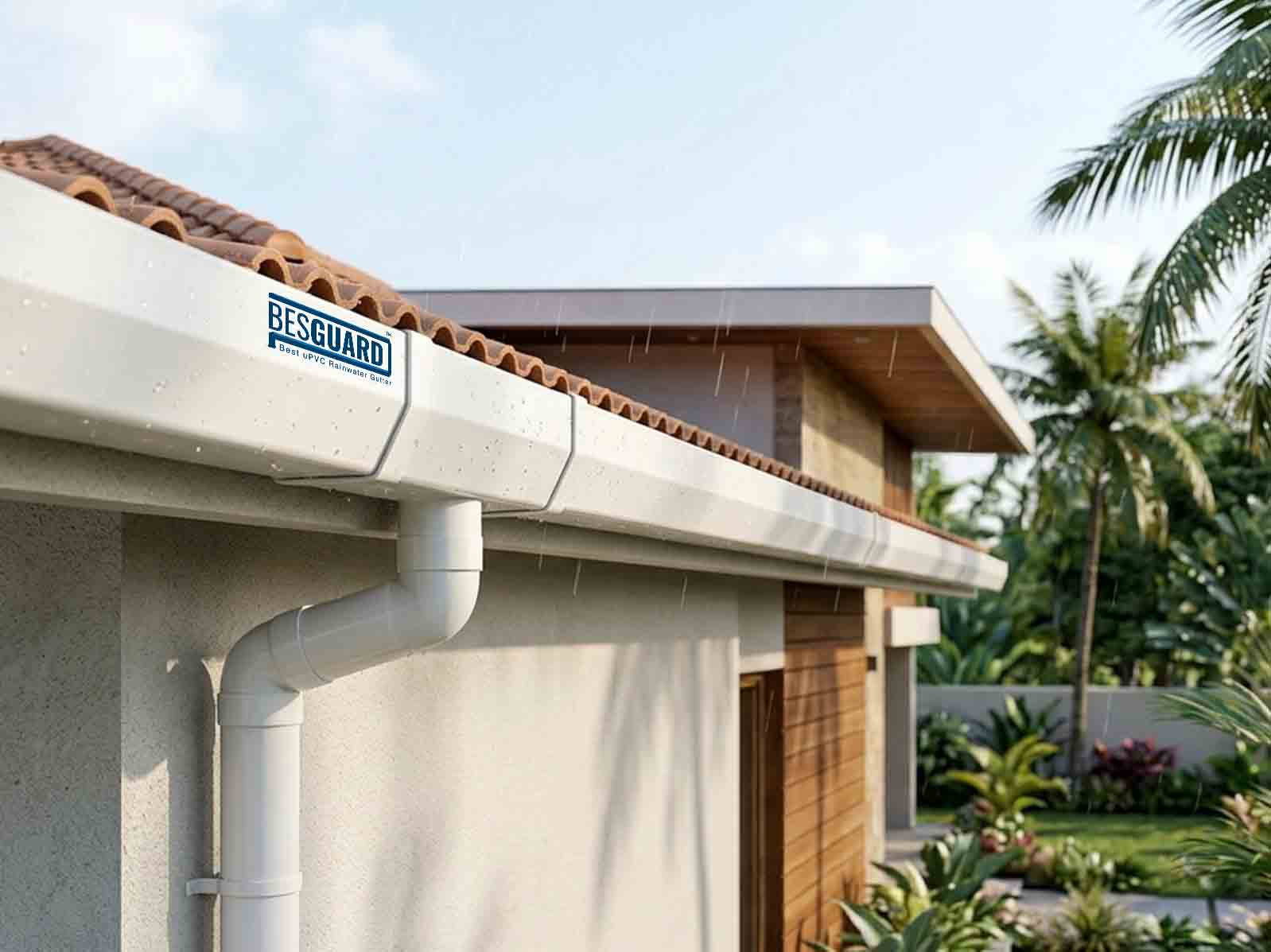
Besguard uPVC Rainwater Gutters are engineered for India's demanding weather conditions.
Key advantages include:
Designed specifically for Indian monsoon conditions, Besguard systems provide reliable and long-lasting rainwater management.
Most rainwater gutter problems are not caused by the product itself - they are caused by poor planning and incorrect installation. Choosing the correct gutter size, using enough downpipes, maintaining the proper slope, and installing high-quality fittings all play a vital role in protecting your home from costly water damage. For homeowners in Kerala and across India, investing in a professionally installed uPVC rainwater gutter system is one of the smartest ways to safeguard your property during every monsoon.
With Besguard's advanced gutter technology and expert guidance, you can enjoy efficient rainwater drainage, reduced maintenance, and long-term peace of mind.