
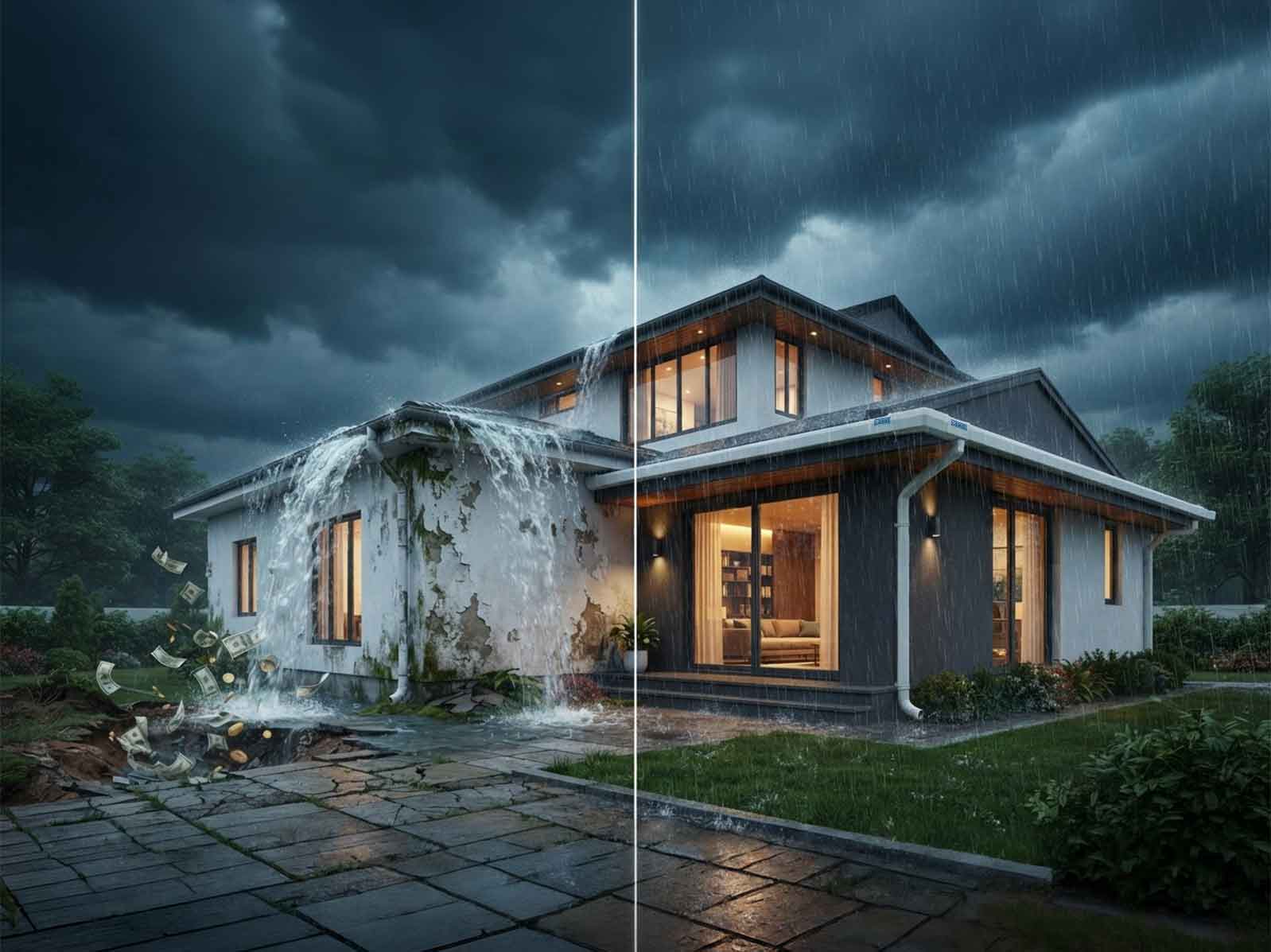
When homeowners think about property damage, they often imagine dramatic events - floods, storms, or major structural failures. However, one of the most expensive threats to your home happens quietly during every rainfall. Each time rainwater is not properly collected and directed away from your house, it slowly damages walls, foundations, paint, landscaping, and even the structural integrity of the building. What seems like a minor overflow today can turn into repairs worth thousands of rupees tomorrow. In Kerala's intense monsoon climate, uncontrolled roof runoff is more than a nuisance - it is a long-term financial liability.
Most homeowners pay close attention to roofing materials, waterproofing, and exterior paint. Yet many overlook one critical system responsible for protecting all of them: the rainwater gutter system.
When rainwater is allowed to overflow from roof edges, several costly problems begin to develop:
These issues rarely appear overnight. Instead, they develop gradually, reducing your property's value year after year.
A typical residential roof collects thousands of litres of water during a heavy Kerala rainfall.
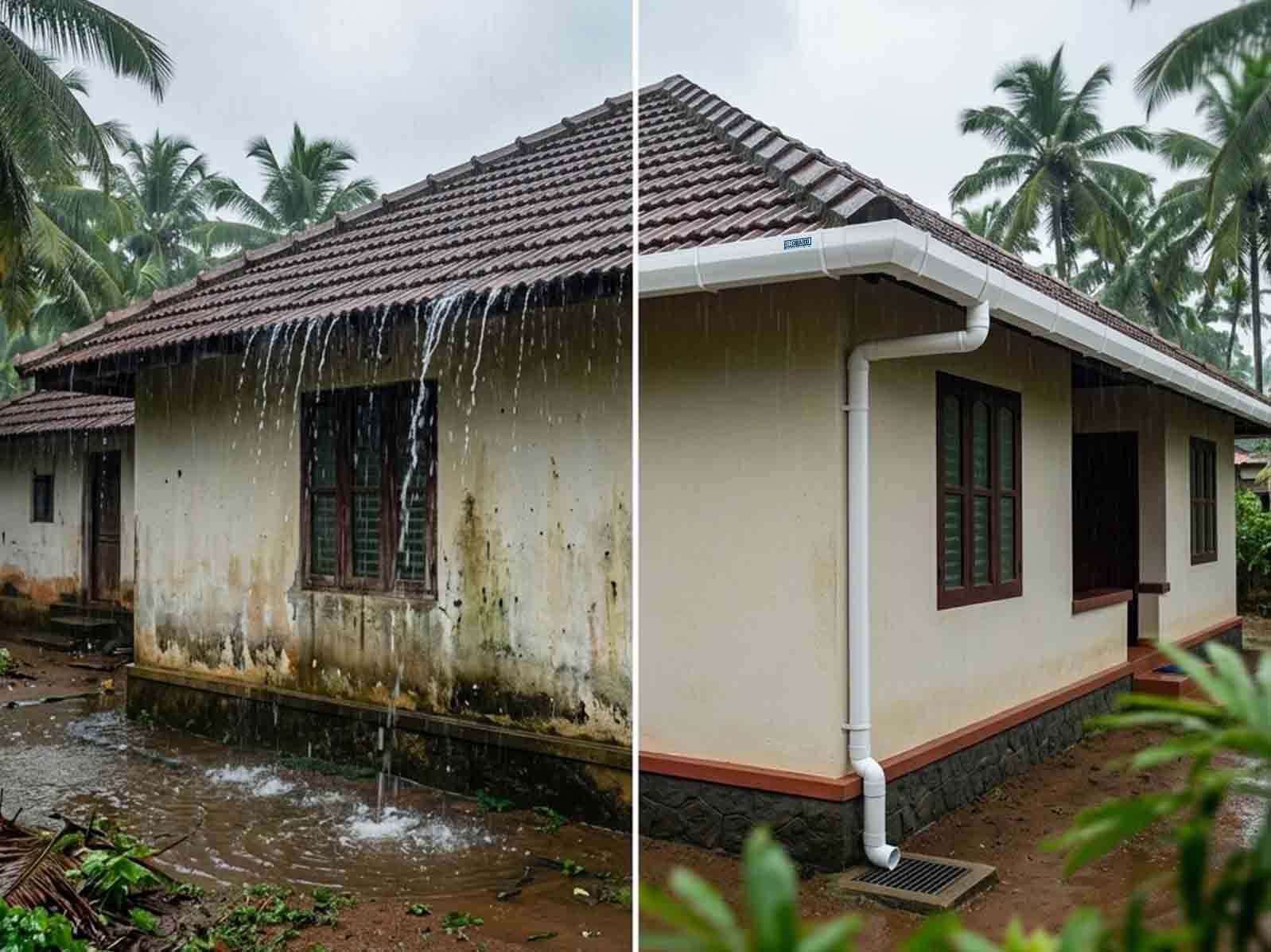
Without an efficient drainage system, the water falls directly beside the building. Over time, this creates continuous moisture exposure around the structure.
The soil surrounding your home absorbs excess water like a sponge.
Repeated saturation weakens the soil and can lead to:
Repairing foundation issues can cost significantly more than installing a proper rainwater management system.
Overflowing rainwater repeatedly strikes exterior walls.
This leads to:
A freshly painted home can begin showing damage within a few monsoon seasons if water management is poor.
When gutters overflow or leak, water often enters through fascia boards and roof junctions.
Common signs include:
Many homeowners spend heavily on waterproofing while ignoring the drainage issue that caused the problem in the first place.
Traditional PVC or metal gutters often struggle during Kerala's monsoon conditions.
Common issues include:
Low-quality gutters often bend under water weight.
Sagging creates water pockets that:
Extreme temperature variations cause expansion and contraction. Weak joints develop leaks that continuously expose walls and roof structures to moisture.
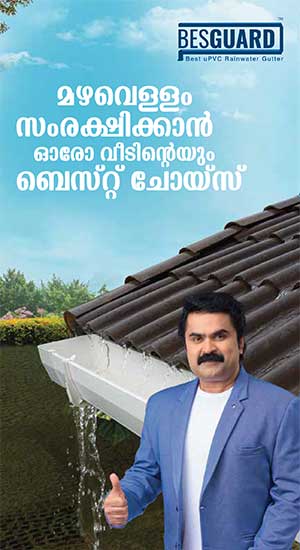
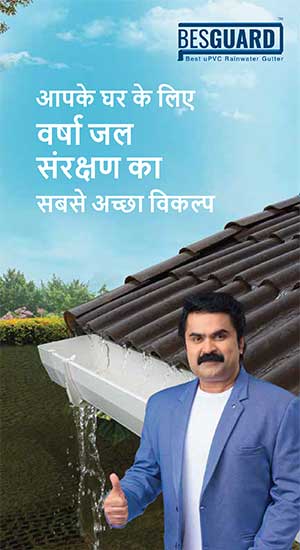
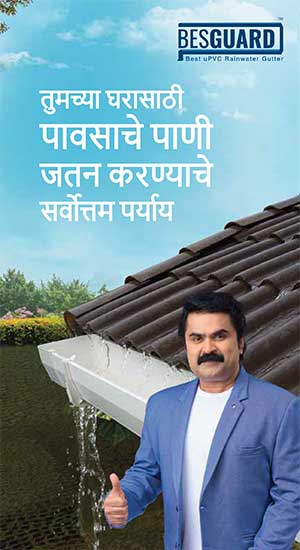
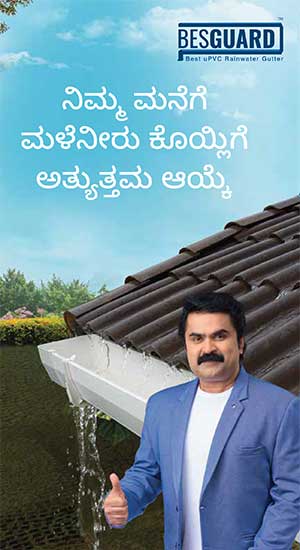
Besguard's advanced uPVC rainwater gutter systems are specifically engineered for heavy rainfall conditions common across Kerala.
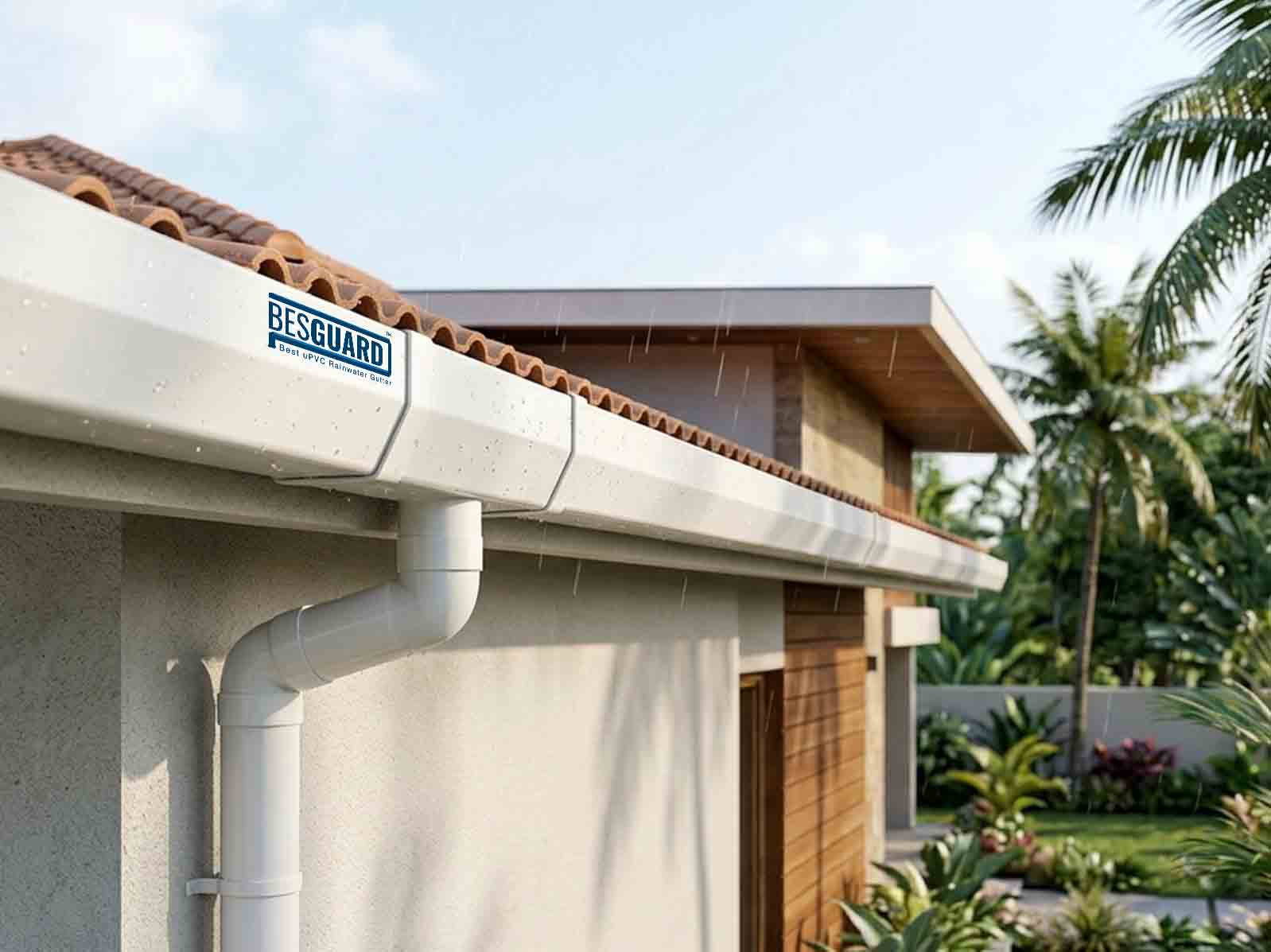
Unlike traditional round profiles, Besguard's trapezoidal shape provides:
Besguard's patented IR-Rib technology strengthens the gutter internally.
Benefits include:
Besguard systems are designed to withstand:
Concealed support systems help maintain the aesthetic appeal of modern homes while delivering superior performance.
Instead of allowing valuable rainwater to go to waste, Besguard systems can be integrated with rainwater harvesting solutions.
Benefits include:
In a state like Kerala, where water conservation is becoming increasingly important, rainwater harvesting transforms roof runoff into a valuable resource.
Consider the costs of:
These repairs can easily exceed the cost of installing a high-quality gutter system.
An engineered rainwater management solution is not an expense; it is a protective investment that safeguards your home's value for years.
Every rainfall either protects your home or slowly damages it. If rainwater is overflowing from your roof edges, pooling near foundations, or staining your walls, your property could be losing value with every monsoon season. A professionally designed rainwater gutter system like Besguard helps capture, channel, and manage rainwater effectively, preventing costly structural damage while supporting rainwater harvesting initiatives. The next time it rains, take a moment to observe where the water goes. That simple observation could save you lakhs in future repair costs.