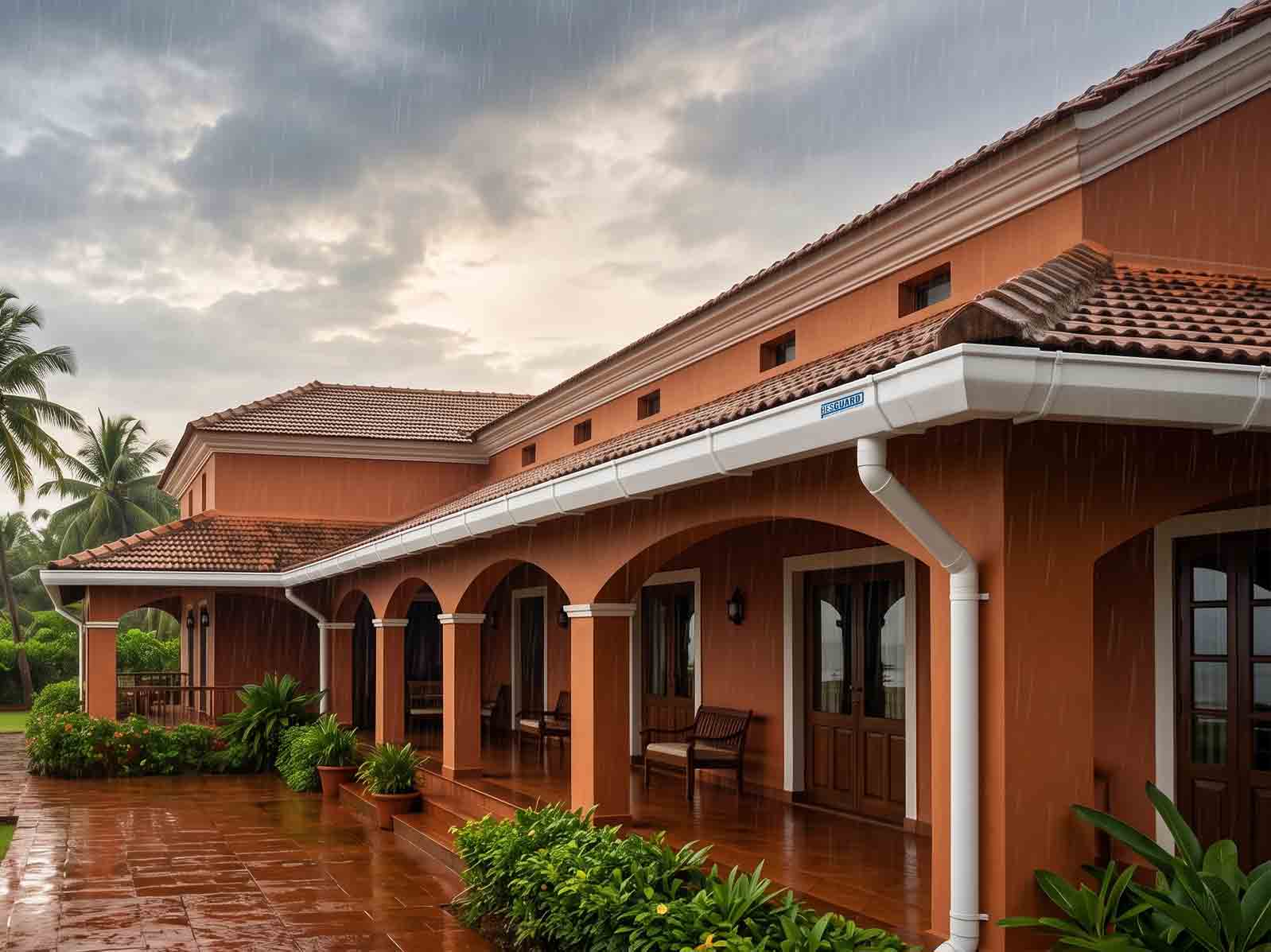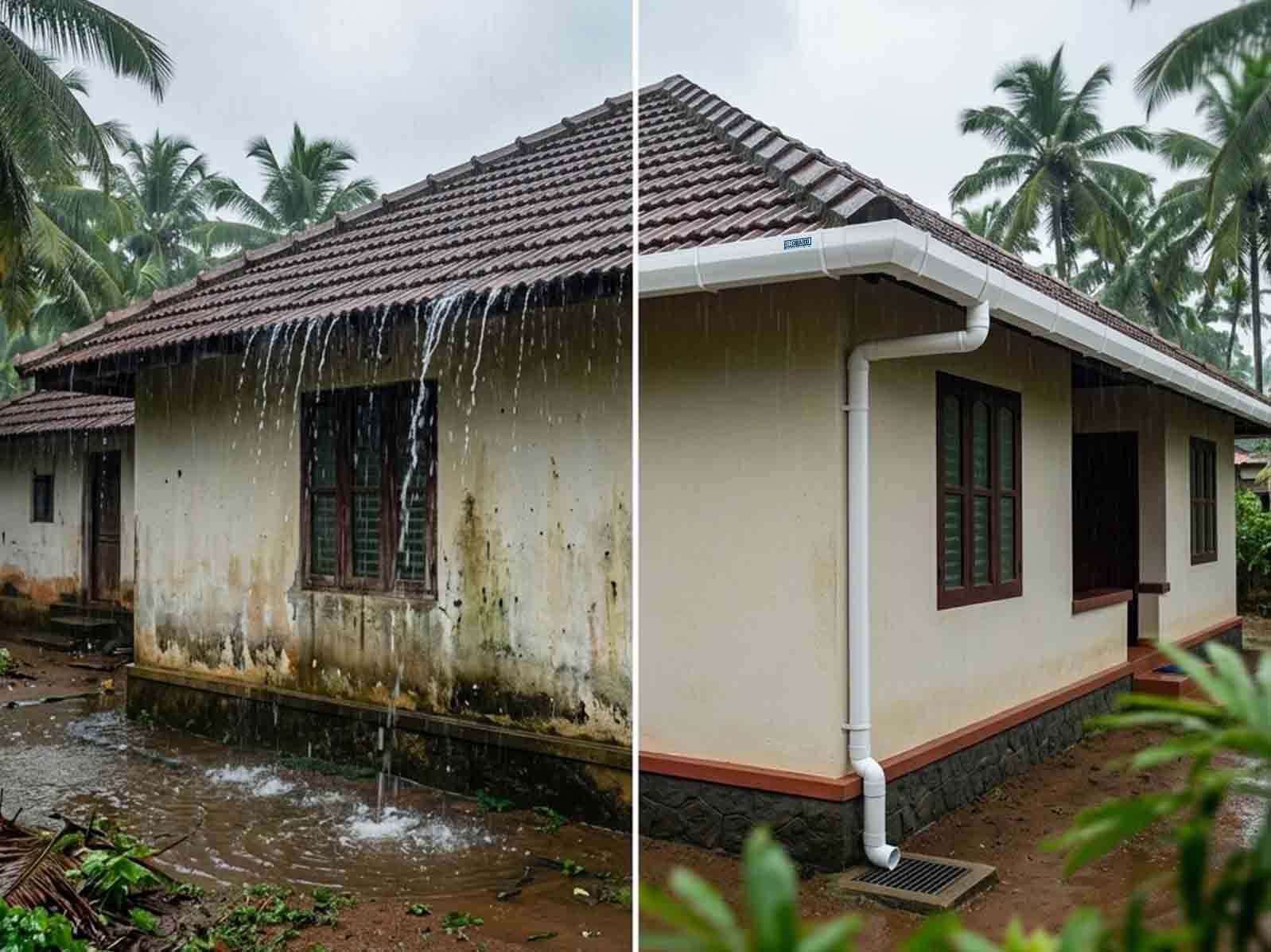

Installing a rainwater gutter system is not just about attaching gutters to the edge of your roof. One of the most important factors in effective rainwater management is choosing the correct gutter size and the right number of downpipes. A system that is too small for your roof can quickly overflow during heavy rainfall, leading to wall seepage, foundation erosion, dampness, and expensive repairs. For homes in Kerala, where annual rainfall often exceeds 3000mm, proper gutter sizing becomes even more critical.
Every roof acts as a rainwater collection surface. During heavy rainfall, thousands of liters of water can fall on your roof in just a few hours.
The amount of water your gutter system needs to handle depends on three main factors:
Larger roofs collect more water and therefore require larger gutters and additional downpipes to safely channel water away from the property.
Kerala experiences some of the heaviest rainfall in India, especially during the Southwest Monsoon. Short periods of intense rainfall can overwhelm undersized gutter systems.
Common signs of insufficient gutter capacity include:
Many of these problems are caused not by poor installation, but by incorrect sizing.
As a general guideline:
The goal is to distribute water evenly across the drainage system rather than forcing large volumes through a single outlet.
Not all roofs behave the same during rainfall.
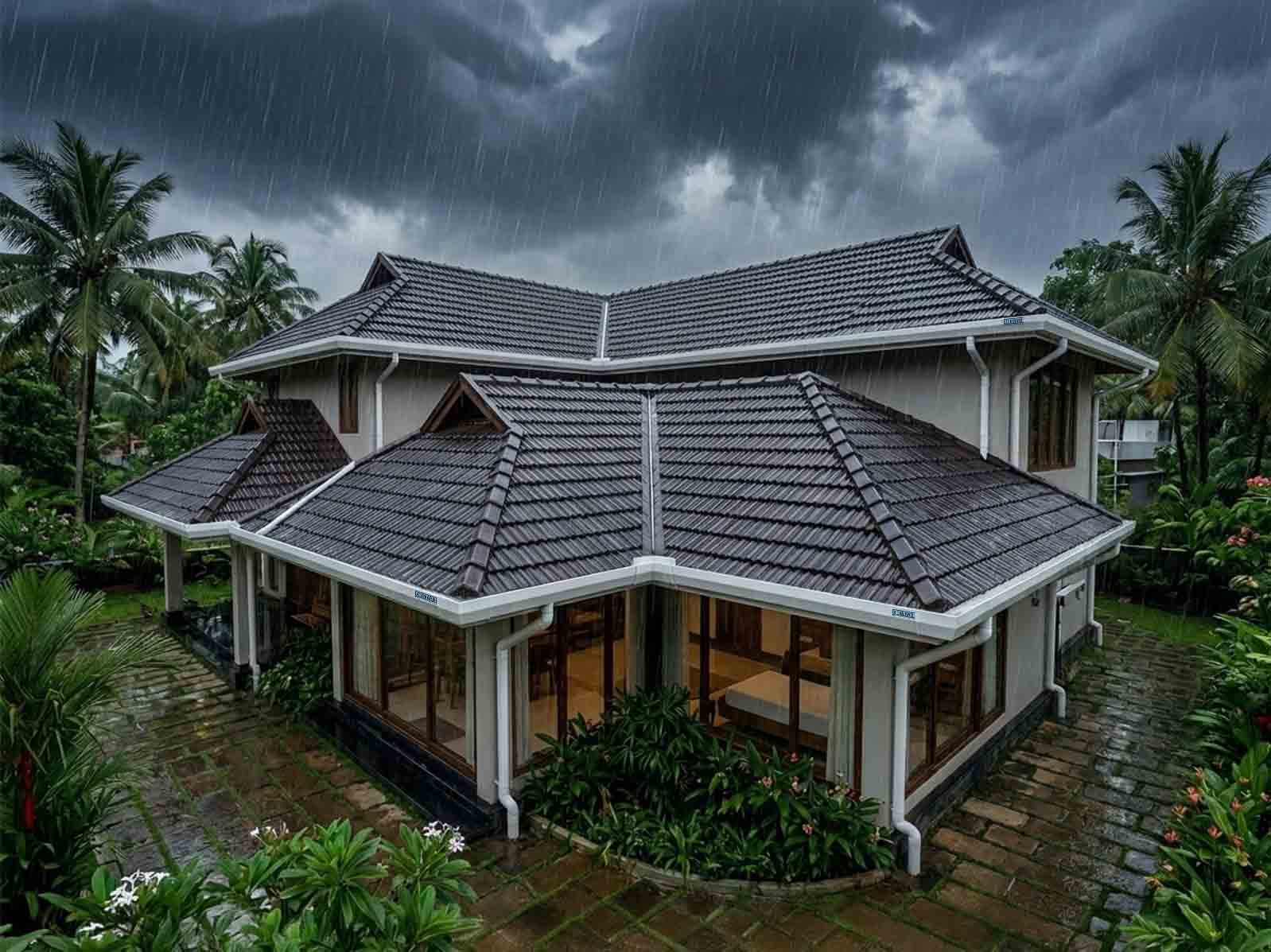
Steep tiled roofs allow rainwater to flow rapidly, often requiring additional downpipes to handle sudden water surges.
Flat roofs release water more slowly but can concentrate runoff at specific drainage points.
Contemporary villas with multiple roof sections often require customized downpipe placement for maximum efficiency.
Roof valleys collect water from two roof slopes and can significantly increase water flow in one section of the gutter.
These areas usually require additional drainage capacity.
The diameter of the downpipe is just as important as the number of downpipes. Small pipes may restrict flow and cause overflow during intense rainfall events. For high rainfall regions like Kerala, larger diameter downpipes are generally recommended to ensure smooth water evacuation.
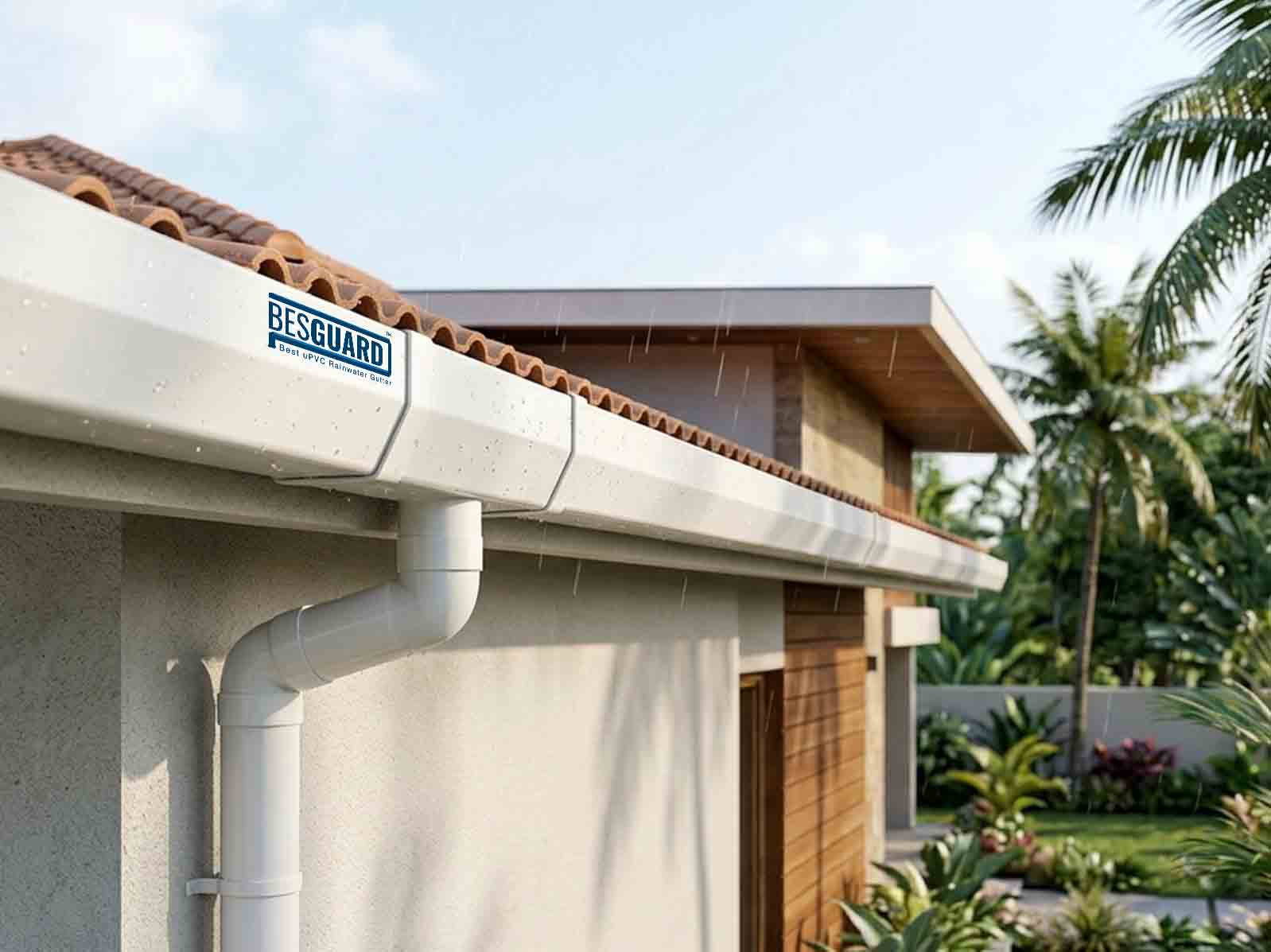
Besguard gutter systems are engineered specifically for India's monsoon climate and are designed to handle large volumes of rainwater efficiently.
Features include:
Besguard's professional team also assists homeowners and fabricators in selecting the correct gutter and downpipe configuration based on roof size and rainfall conditions.
Properly sized downpipes improve the efficiency of rainwater harvesting systems by ensuring maximum water collection during heavy rains.
This allows homeowners to reuse rainwater for:
Choosing the right number of downpipes is one of the most important decisions in any gutter installation project. An undersized system can lead to overflow, dampness, and costly structural damage, especially in Kerala's demanding monsoon climate. By considering roof size, roof design, rainfall intensity, and water flow requirements, homeowners can ensure reliable long-term protection for their property. With Besguard's advanced uPVC gutter systems and expert guidance, you can enjoy efficient rainwater management and complete peace of mind through every monsoon season.