
The southwest monsoon arrives in Kerala with a familiar, dramatic flair. Dark clouds roll over the Western Ghats, and within minutes, the landscape is drenched in a rhythmic, heavy downpour. For a state that receives an average annual rainfall of around 3,000 mm, nearly three times the national average, water would seem to be the least of our worries.
Yet, paradoxically, just a few months after the monsoons retreat, many parts of Kerala face severe water scarcity. Rivers dry to a trickle, groundwater levels plummet, and thousands of households find themselves dependent on expensive water tankers.
Where does all that rainwater go? The unfortunate reality is that the vast majority of it hits our roofs, rushes down our drains, and flows straight into the sea, taking valuable topsoil with it. Every monsoon, the average Kerala home loses hundreds of thousands of litres of pristine, soft water.
If you aren't actively collecting this resource, you are quite literally watching money and security wash down the drain. Implementing a robust, modern rainwater harvesting system is no longer just an eco-friendly choice; it is a critical step toward climate resilience, structural protection, and household self-sufficiency.
Every rainwater harvesting system begins at the top. Your roof acts as the primary catchment area. The total volume of water you can potentially harvest depends directly on the surface area of your roof and the regional annual rainfall.
Kerala’s architectural landscape features a unique mix of traditional sloped roofs (now frequently covered with premium roofing sheets or shingles) and contemporary flat concrete decks. Fortunately, both are highly capable catchments, provided they are managed correctly:
Regardless of your roof type, the material matters. Traditional clay tiles and modern, high-grade uPVC or coated metal surfaces are excellent for harvesting. However, if your roof has exposed asbestos or is treated with toxic, lead-based anti-fungal paints, the water collected should strictly be relegated to secondary uses like gardening, floor washing, or flushing, rather than filtration for drinking.
The journey of a raindrop from your roof to your storage tank relies entirely on the conduit system. This is where many traditional systems fail. Standard local plumbing pipes or cheaply fabricated, flimsy gutters often bow, crack under intense heat, or overflow during a typical Kerala cloudburst.
To bridge the gap between your roof and your storage facility effectively, a high-performance gutter-to-harvesting system must be deployed. Modern rainwater management engineering emphasizes three critical criteria for this channel:
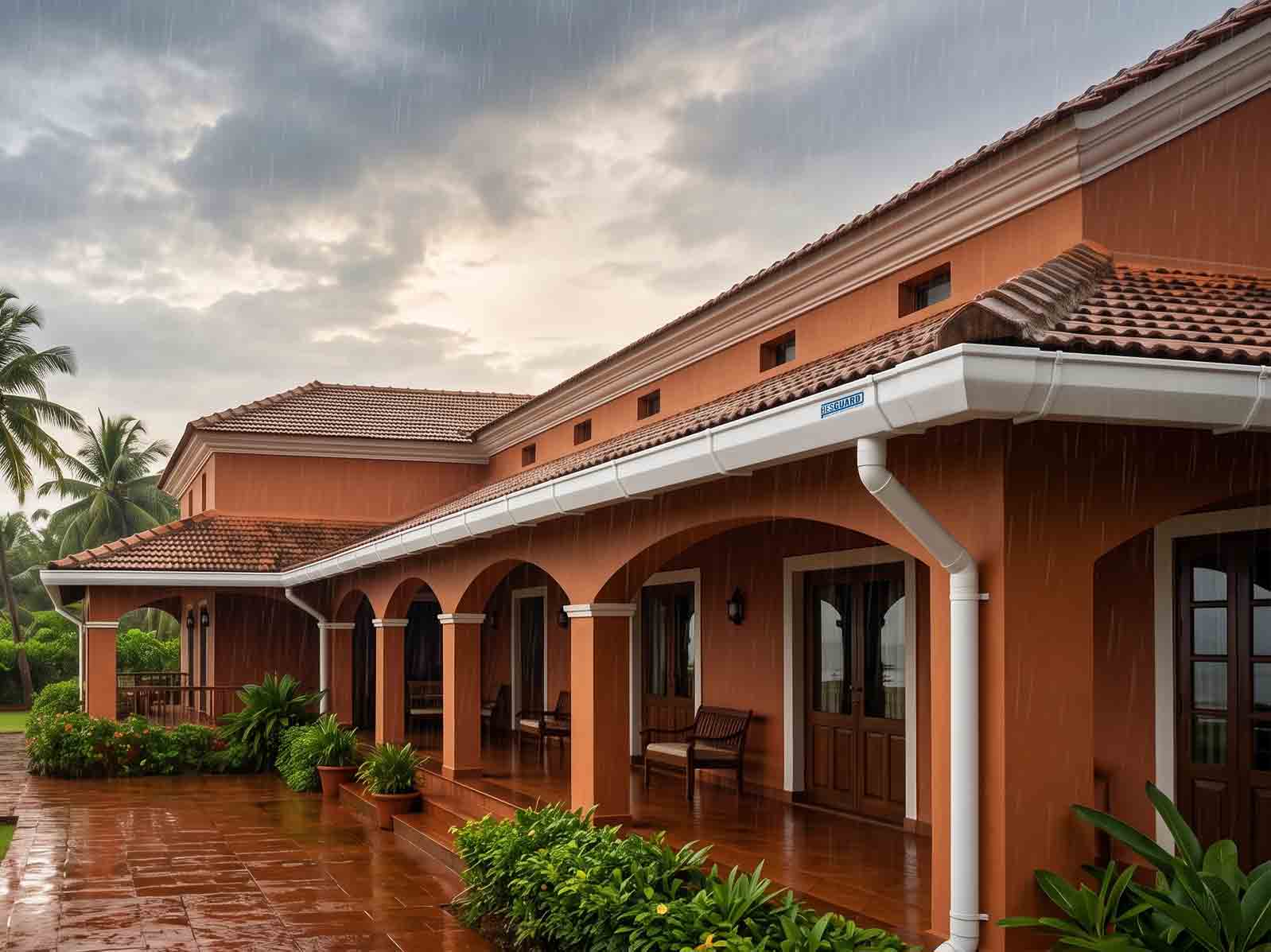
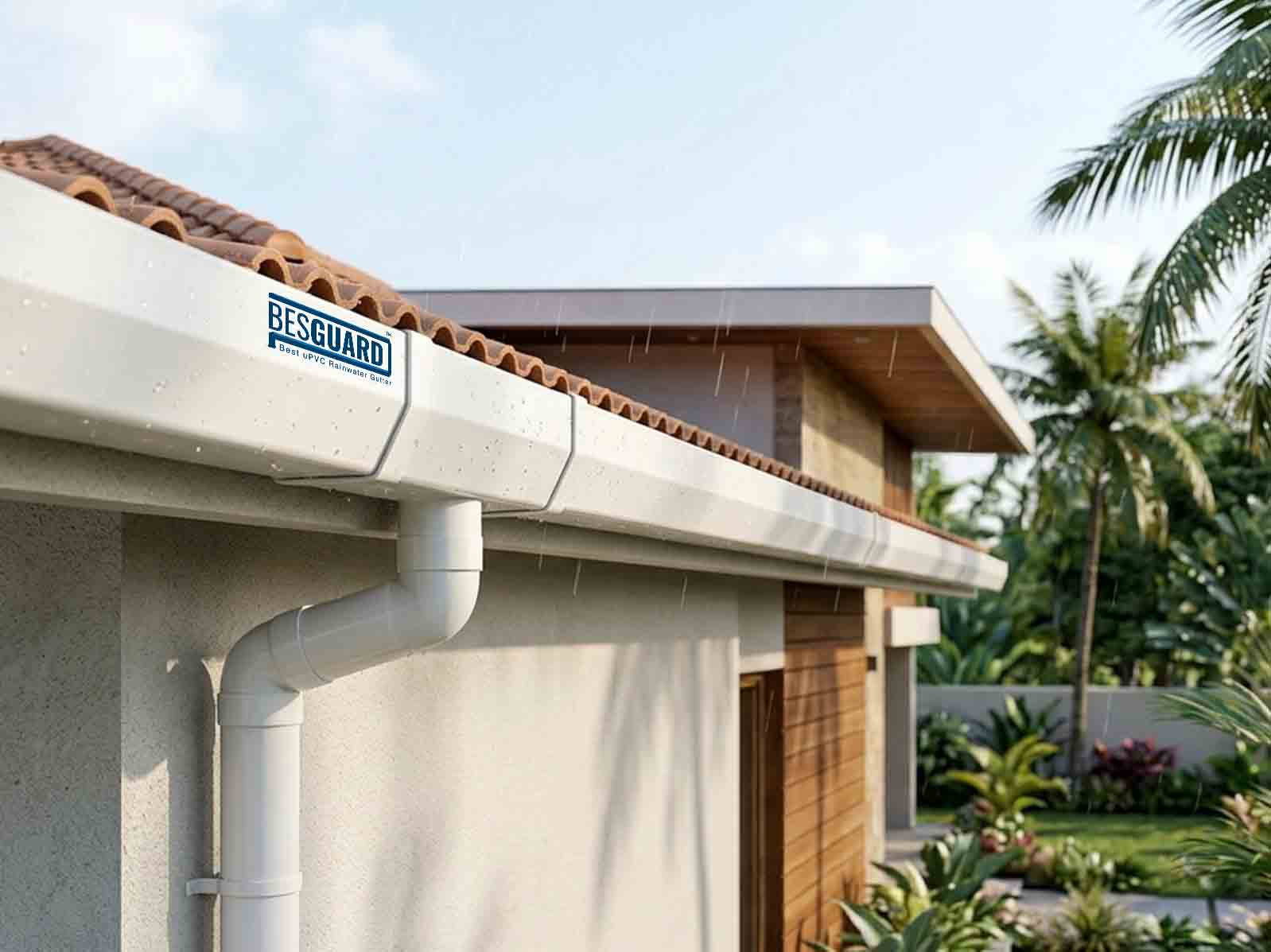
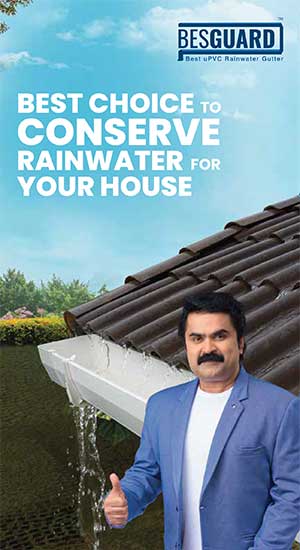
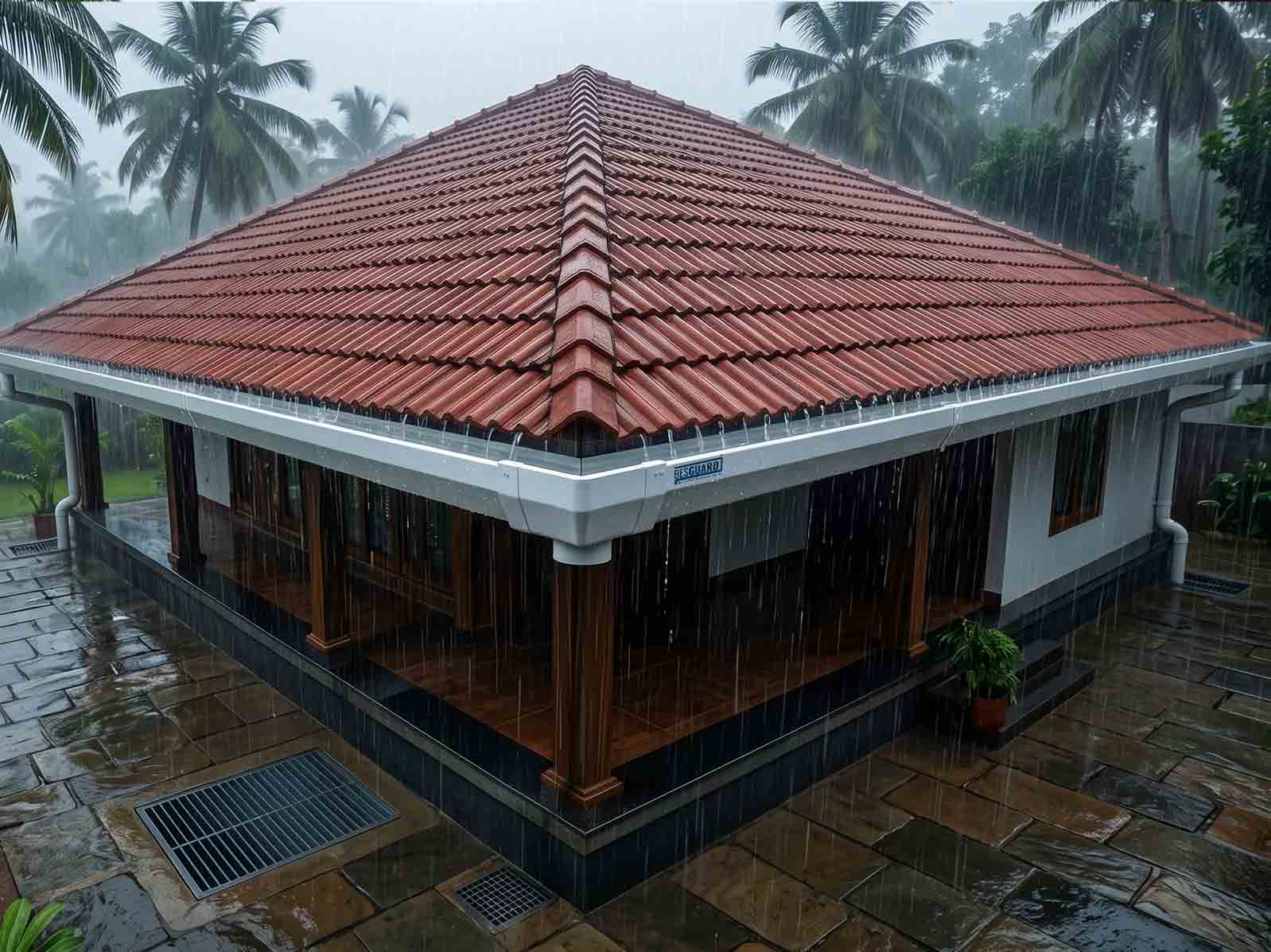
Kerala’s rains are heavy. A standard round gutter often fails to contain the sheer velocity and volume of a tropical downpour, leading to massive spillover that erodes the foundation of your home and dampens exterior walls. Advanced options, such as the precision-engineered uPVC rainwater gutters from brands like Besguard, utilize a unique trapezoidal canal design. This architectural profile facilitates a significantly faster water flow and boasts a higher carrying capacity than standard gutters of identical dimensions, ensuring zero overflow even during heavy storms.
Gutters in Kerala must endure extreme seasonal shifts - from baking 38°C summer heat to relentless monsoon battering. Standard plastic gutters sag over time, creating low points where water pools, breeds mosquitoes, and rots organic debris. Selecting a system equipped with an Internally Reinforced Rib (IR-Rib) design ensures the profile maintains its rigid shape, providing the structural sturdiness required to handle the immense weight of fast-flowing water. Furthermore, clean external aesthetics - achieved by using concealed inner clamps - ensure that your home’s premium exterior elevation isn't compromised by ugly external brackets.
The first 10 to 15 minutes of a monsoon shower act as a natural scrubbing mechanism for your roof, washing away accumulated bird droppings, dry leaves, dust, and atmospheric pollutants. A well-designed gutter system must route this initial contaminated stream away from your primary reservoir via a first-flush diverter. Once the initial dirty water is isolated, a clean, clear stream can then be directed securely through a secondary mesh filter into your main storage unit.
Once the water is collected and cleanly routed through your high-capacity gutters, where should it go? Depending on your property layout, budget, and local water table, you have two primary options: direct storage or groundwater recharge.
For immediate household use, water can be routed into large-capacity concrete, ferrocement, or food-grade plastic surface tanks. Because rainwater is naturally soft, it is exceptional for washing clothes, cleaning plumbing fixtures without scale buildup, and, when routed through a proper sand-and-charcoal physical filtration system, it becomes pristine water suitable for cooking and drinking.
If building massive storage tanks isn't feasible, you can use your high-capacity gutter system to rejuvenate your existing open well or borewell. In Kerala, many household wells dry up by February because the naturally hard laterite and clay soils don't always allow rapid infiltration of surface runoff.
By directing clean, filtered rainwater from your roof directly down into an open well, you artificially raise the local water table. This process doesn't just benefit your home; it replenishes the surrounding aquifers, ensuring that your well remains functional and full even in the peak of April.
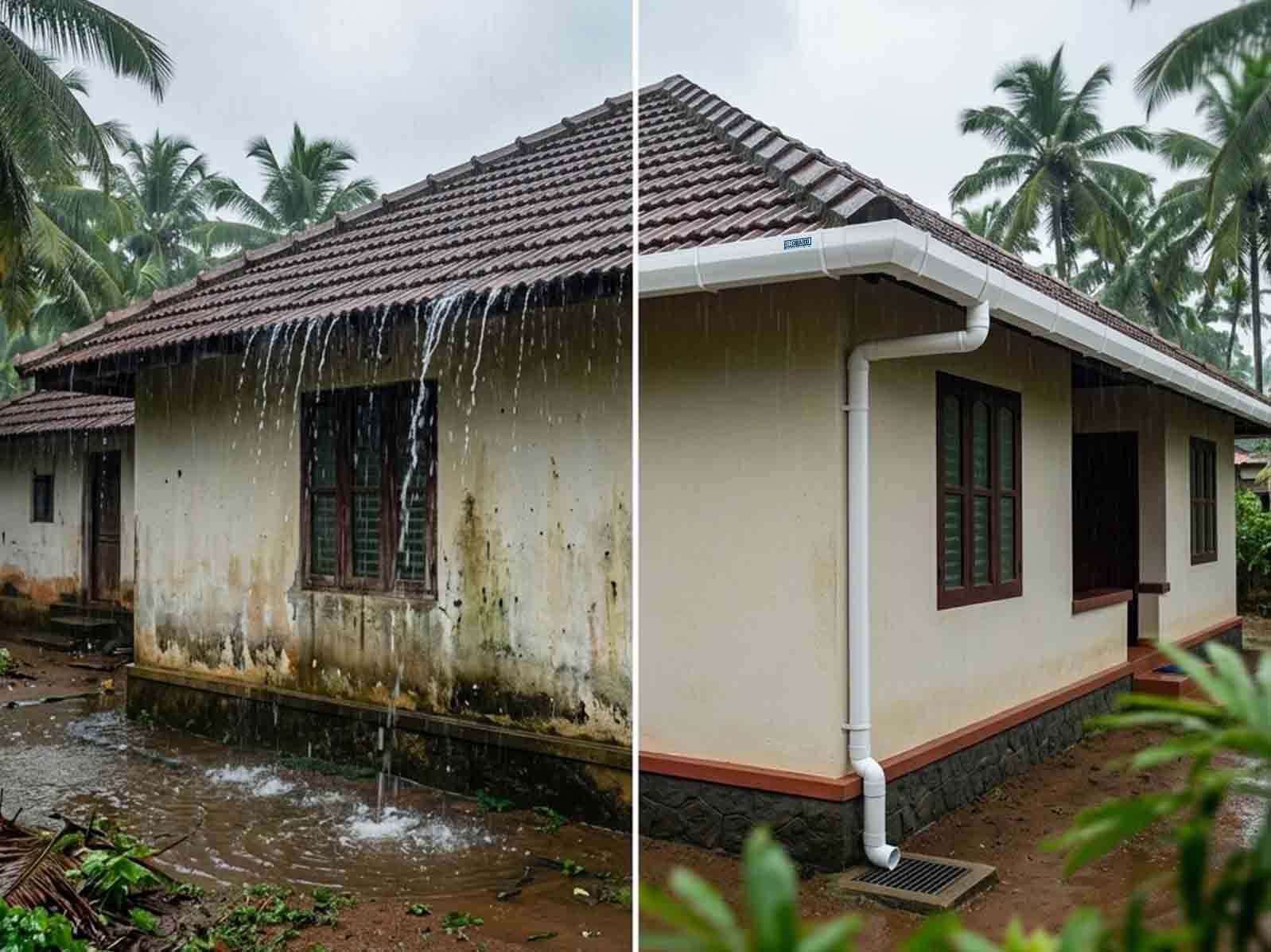
Investing in a premium rainwater harvesting pipeline isn't just an ecological duty; it is an exercise in building protection. When a roof lacks a dedicated, heavy-duty gutter system, thousands of litres of water cascade violently off the eaves. This creates a high-velocity splash zone around the base of your house.
Over time, this uncontrolled water intrusion leads to:
By managing rainwater through dedicated, high-capacity conduits, you protect your architectural investment from the top down.
Kerala is blessed with abundant natural rainfall, yet our seasonal water crises remind us that resource abundance without proper management leads to artificial scarcity. Transitioning to a sustainable lifestyle starts right at your roofline. By pairing an optimized catchment area with a rugged, high-capacity uPVC gutter system like Besguard and routing that water into direct storage or well recharges, you safeguard your home against structural decay while securing a free, endless supply of pure water.
Don't let the next monsoon go to waste. Upgrade your home’s water management framework today, stop losing thousands of litres of water, and turn your property into a model of self-sustaining climate resilience.