

To clean rainwater gutters, work safely from a stable ladder, scoop out leaves and debris by hand, flush the channel with a garden hose toward the downpipe, clear any blockage in the downpipe, and check that water drains freely. Clean your gutters at least twice a year - before and after the monsoon - and more often if trees overhang the roof.
Even the best uPVC gutter system needs occasional cleaning. In Kerala, where coconut palms, rubber, and mango trees constantly shed leaves and flowers, gutters collect debris that washes in with every shower. Left uncleared, that debris blocks the flow, causes overflow, and undoes everything the gutter is meant to do.
The good news: cleaning a gutter is simple, and you only need to do it a few times a year. This guide walks through the whole process safely.
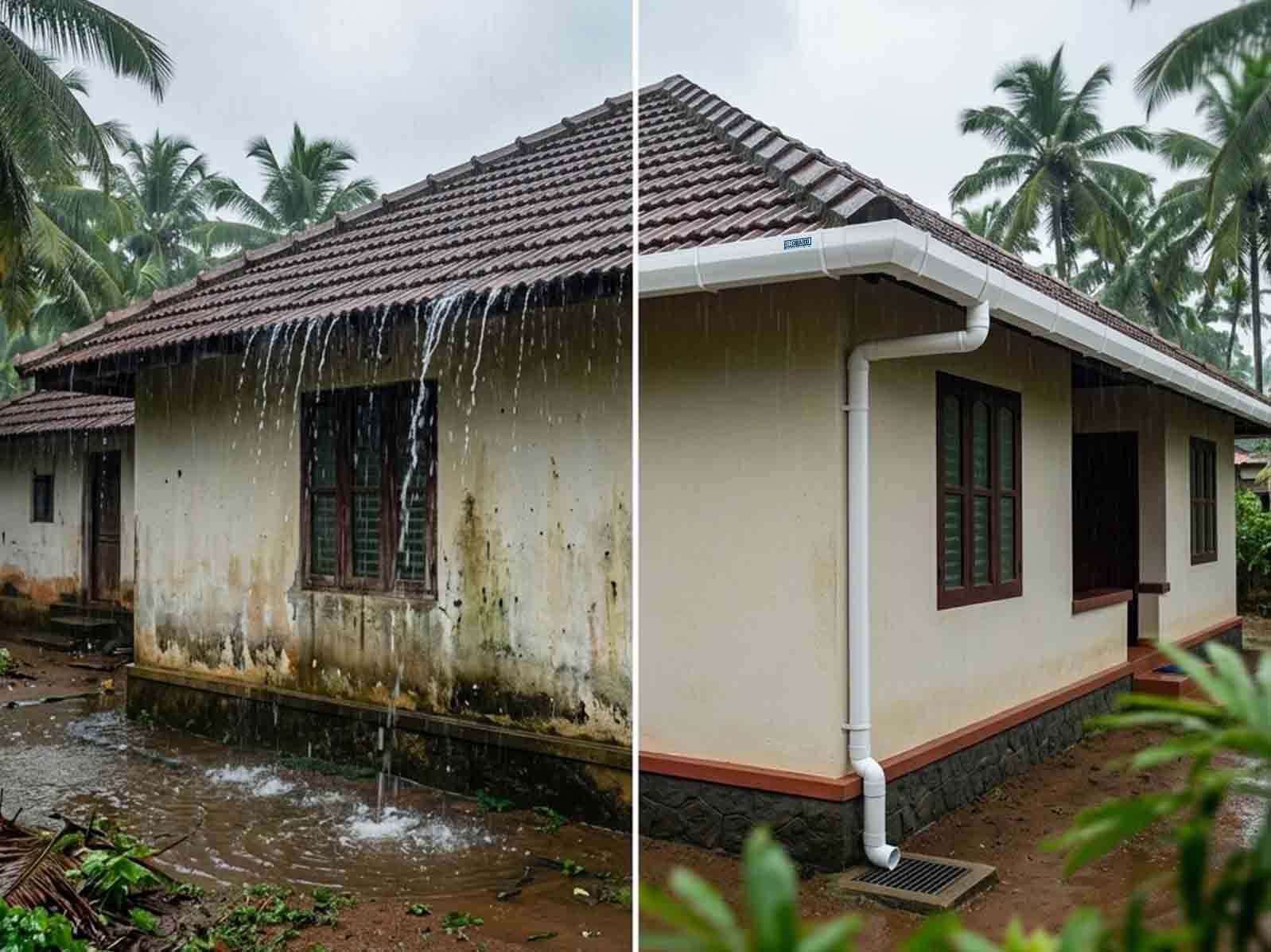
A blocked gutter cannot do its job. When leaves and debris pile up, water backs up in the channel and spills over the outer edge - running down your walls and pooling beside your foundation, exactly the damage the gutter exists to prevent.
Clogged gutters in Kerala's climate also cause:
Regular cleaning takes an hour or two and prevents thousands of rupees in water damage.
Clean your gutters at least twice a year - once before the monsoon (April - May) and once after it (October - November).
Homes with overhanging trees may need cleaning three or four times a year, because leaf and flower fall is heavier.
A simple rule: if trees hang over your roof, clean more often. If your roof is open and clear, twice a year is usually enough.
Before you start, gather:
Place the ladder on firm, level ground and have someone hold it steady. Never overreach - move the ladder along as you go rather than stretching sideways. If your roof is high or you are not comfortable at height, hire a professional. No gutter is worth a fall.
Wearing gloves, scoop out leaves, twigs, flowers, and silt from the channel. Work in sections, starting near a downpipe and moving away from it. Drop the debris into your bucket rather than onto the ground below, so cleanup is easier.
Check whether the downpipe outlet is blocked. Debris often collects at the running outlet where the gutter meets the downpipe. Clear any clog by hand. If the blockage is deeper in the pipe, flush it from the top with a hose, or use a plumber's drain rod to push it through.
Using a garden hose, run water along the gutter from the far end toward the downpipe. This washes out remaining silt and, importantly, shows you whether water flows freely and drains properly. Watch the flow - it tells you if the slope is correct and the downpipe is clear.
As the water runs, look for problems:
Note anything you find for repair.
Since you already have the ladder set up, quickly check the overall system:
Catching a small issue now prevents a big one during the monsoon.
Give the gutter one last rinse, dispose of the collected debris (it's great for compost), and confirm everything drains cleanly. You're done.
Don't wait for the schedule if you notice:
Any of these means the gutter needs attention.
uPVC gutters need less maintenance than metal or concrete, but they still need occasional cleaning. uPVC does not rust, corrode, or grow algae the way metal and concrete do, and its smooth internal surface lets debris wash through more easily. But leaves and silt still collect, so periodic clearing is still necessary.
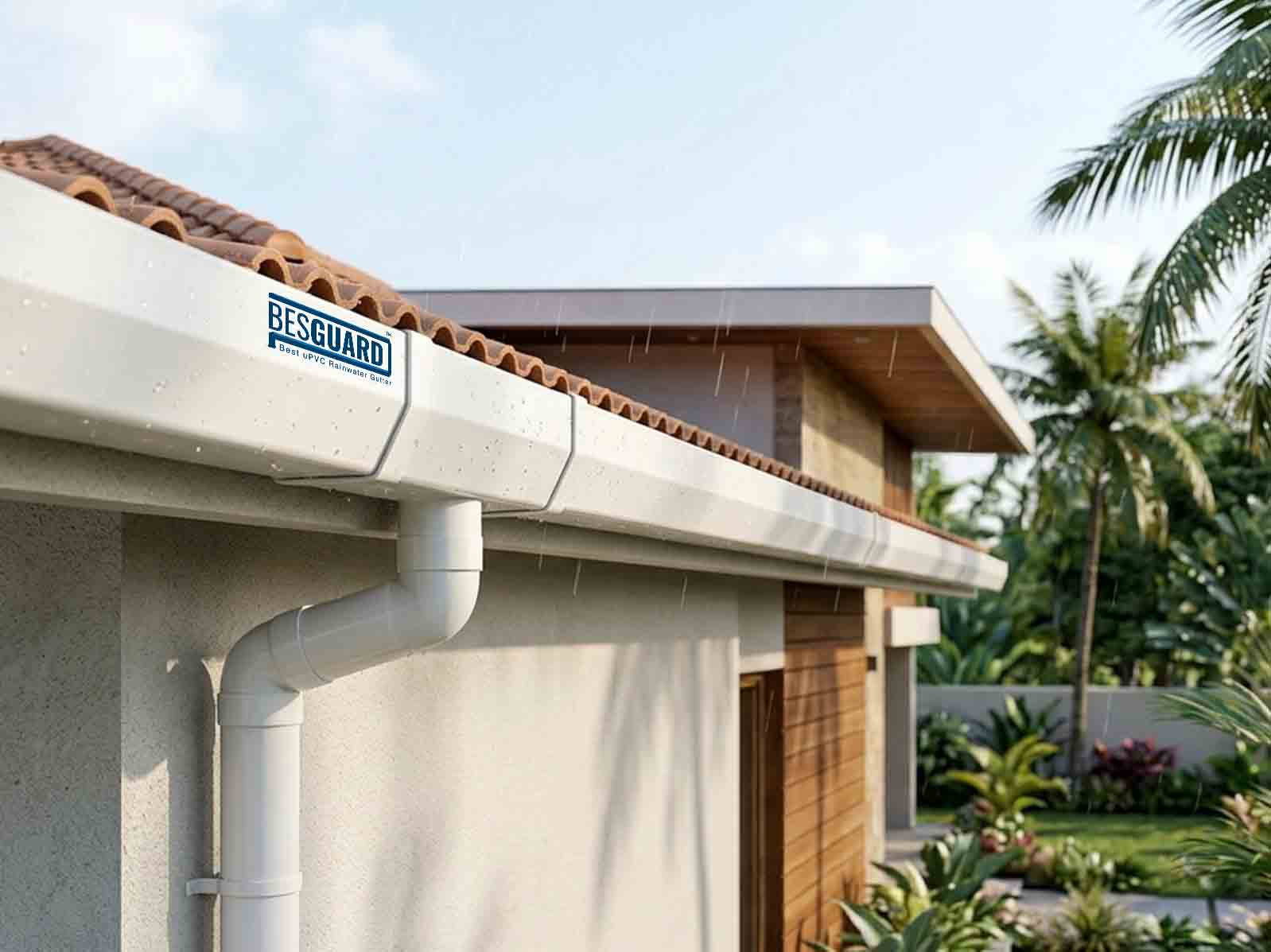
Quality systems like Besguard, with a smooth-bore high-capacity profile, are designed so debris flushes toward the outlet rather than lodging in the channel - making cleaning quicker and less frequent.
Clean your own gutters only if you can do so safely. Call a professional if:
The cost of professional cleaning is small next to the cost of a fall or of water damage from a missed problem.
Cleaning your rainwater gutters is one of the simplest and most valuable pieces of home maintenance you can do. Twice a year - before and after the monsoon - clear the debris, flush the channel, check the downpipe, and inspect the system. It takes an hour or two and protects your walls, foundation, and roof from far more expensive damage.
A well-designed system makes this even easier. Besguard's smooth-bore, high-capacity uPVC gutters are engineered so debris flushes through rather than building up - meaning less cleaning, fewer blockages, and reliable performance through every Kerala monsoon.
Keep your gutters clear, and they'll keep your home protected.