To size a rainwater gutter, multiply your roof's plan area by the heaviest rainfall intensity your area is likely to get, then choose a gutter profile and downpipe count that can carry that flow. For most Indian homes, a 165 mm uPVC gutter suits moderate roofs, and a 225 mm profile suits larger roofs or heavy-rain regions. Roofs up to 50 m² usually need one downpipe, 50 - 100 m² need two, and above 100 m² need three or more.
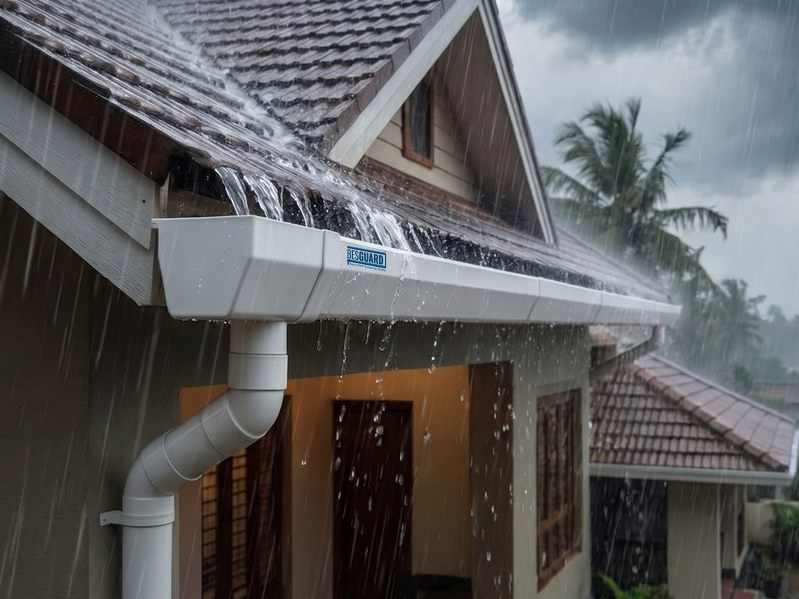
An undersized gutter overflows during a downpour, and the water runs down walls, stains paint, and can weaken foundations. Sizing the gutter correctly is the cheapest way to prevent that damage, and it takes only a few measurements.
This guide shows you how to measure your roof, estimate the water it will shed, and match that to a Besguard profile.
Indian monsoon rain is intense in short bursts. A gutter that handles a steady drizzle can still overflow during a cloudburst. Rainfall intensity, not just total annual rainfall, decides whether your gutter copes.
Three factors change how much water your gutter must carry:
Use the plan area, meaning the footprint of the roof as seen from above, not the sloped surface. For a simple gable roof, multiply the length by the width of the building footprint. Include any porch or extension that drains into the same gutter.
Work in square metres (m²). If the roof has several sections that drain into one gutter, add their areas together. If sections drain separately, size each run on its own.
Rainfall intensity is the depth of rain per hour, measured in millimetres per hour (mm/hr). For sizing, use a design intensity that reflects your area's heavy rain, not its average.
A useful rule is that 1 mm of rain falling on 1 m² produces 1 litre of water. So the water a roof sheds per hour equals:
Roof area (m²) × rainfall intensity (mm/hr) = litres per hour
Dividing by 3,600 converts this to litres per second, which is the unit that matters when you compare against a gutter's capacity.
Take an 80 m² roof in a region where you plan for a design intensity of 100 mm/hr (use your local figure for real projects):
That roof needs a gutter and downpipes that can carry about 2.2 litres per second at peak, with a margin for debris and blockages.
Check the design intensity for your area with your local authority or a qualified installer. Rainfall varies a lot between the coast, the Ghats and inland cities, and a figure that works in one district may fall short in another.
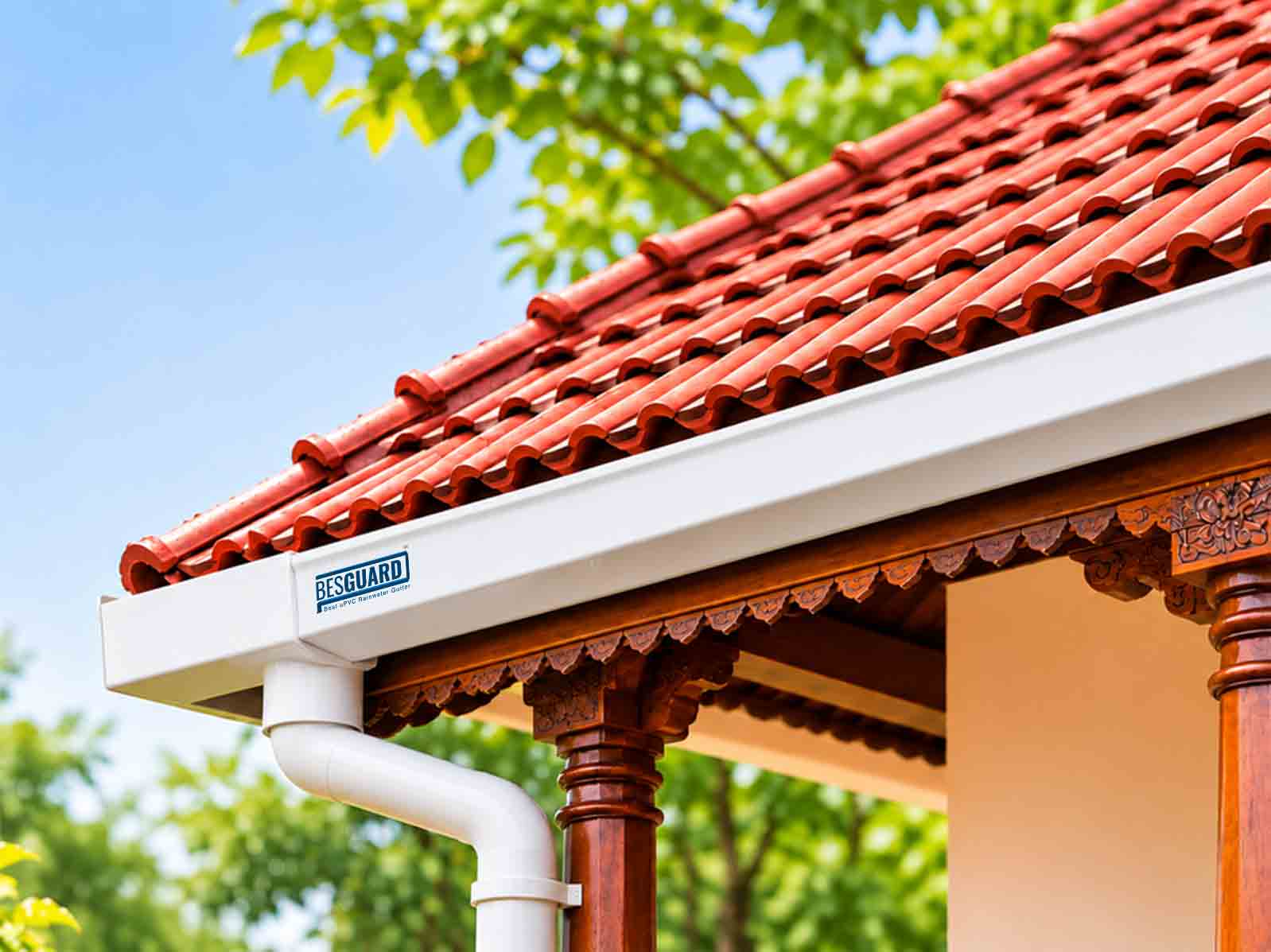
Besguard uPVC gutters come in two profiles:
|
Profile |
Capacity |
Best for |
|
165 mm (16 litres per metre) |
Moderate |
Smaller roofs, drier inland areas, and roofs with several downpipes |
|
225 mm (20 litres per metre) |
High |
Larger roofs, heavy-rain regions such as the Konkan coast, Western Ghats and cyclone-prone coasts |
Choose 225 mm when the roof is large, when the area gets intense bursts, or when the roof has a long run of gutter draining to a single outlet. Choose 165 mm for smaller, moderate roofs where the water is spread across more downpipes.
Capacity matters, but downpipe count often matters more. A 225 mm gutter with one downpipe can still overflow at the outlet if the roof is large.
For profile details, see the 165 mm and 225 mm product pages.
Downpipes carry water away from the gutter, and each one can only drain so much. Use these as a starting guide:
|
Roof area |
Downpipes |
|
Up to 50 m² |
1 |
|
50 - 100 m² |
2 |
|
Above 100 m² |
3 or more |
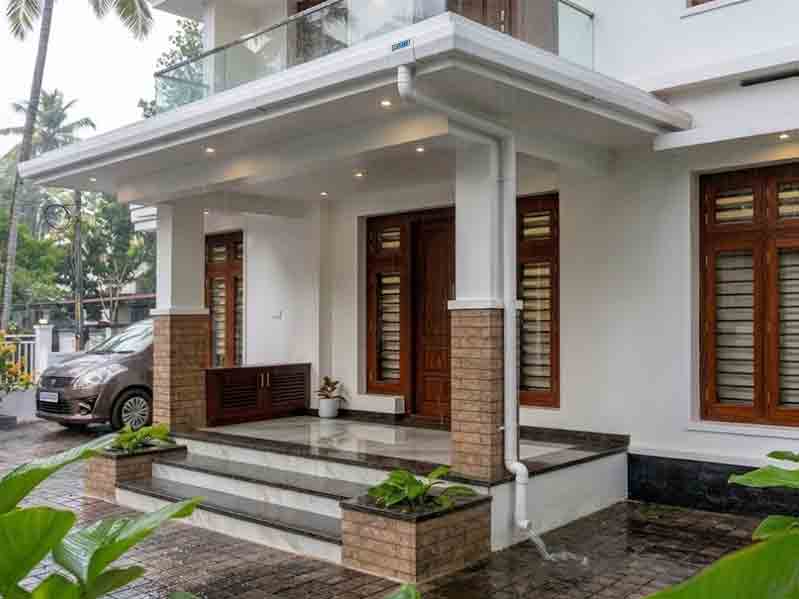
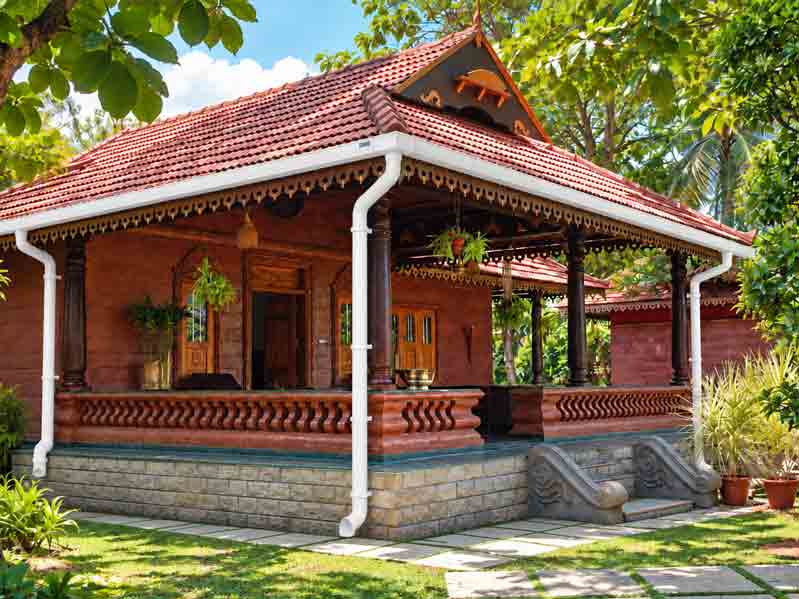
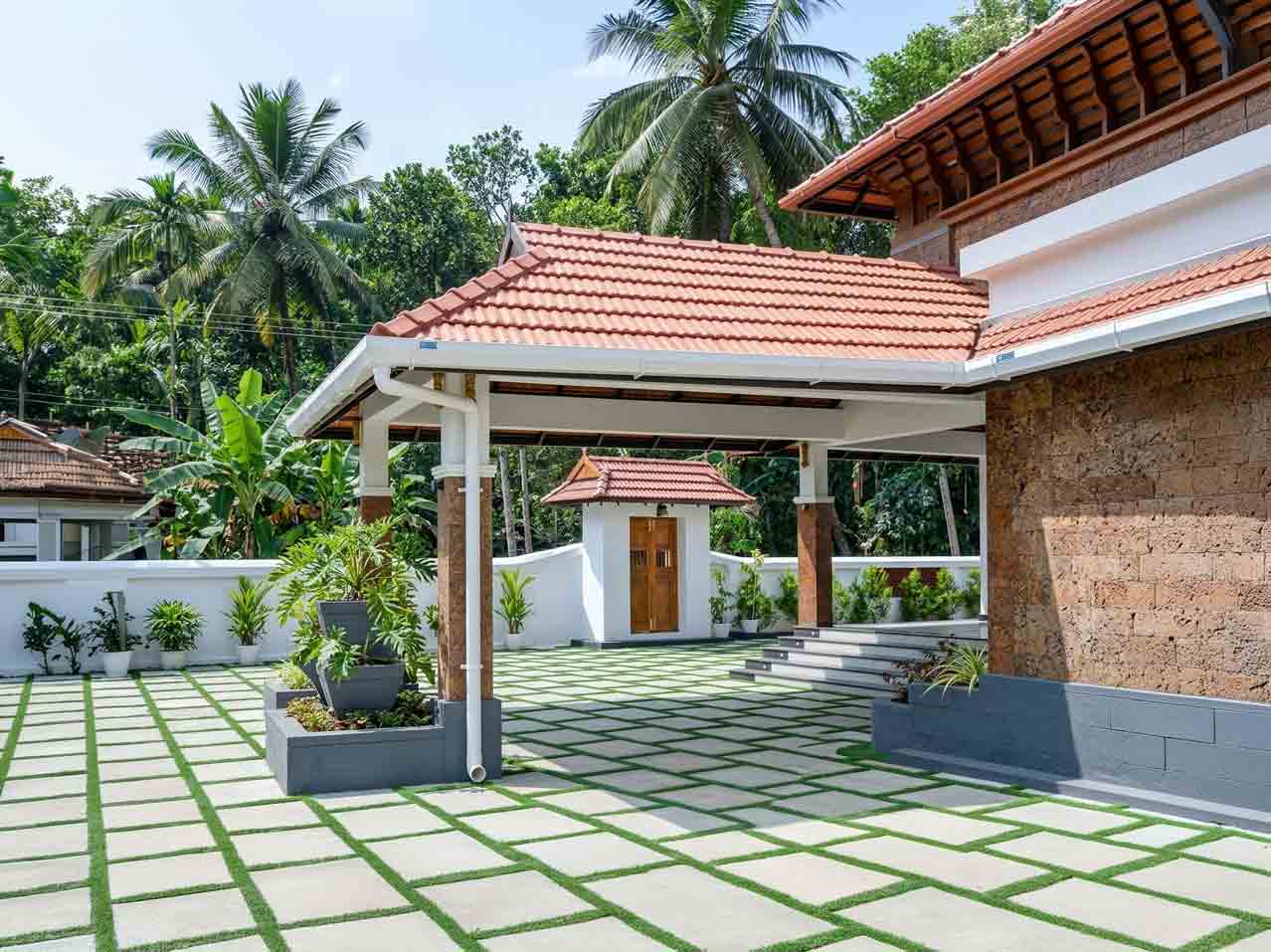
In flood-prone urban areas, add a downpipe even when the roof falls in a lower band. Place downpipes at the low points of the gutter run, at the ends of long runs, and near corners where water collects. The gutter should slope gently toward each outlet so water doesn't pool between them.
Even the right profile fails if it's installed wrong. Gutters need a consistent fall toward the outlets, usually a few millimetres per metre of run. A flat gutter holds water, and a sagging one collects debris and overflows.
Support the gutter with brackets at regular spacing so it doesn't sag under water and leaves. Join sections with proper fittings and seal them, and use outlets and drops that match the profile. For the most common mistakes, read our guide to common rainwater gutter installation mistakes.
uPVC does not rust, so it suits coastal homes where salt air corrodes metal gutters. It resists UV when stabilised, which keeps it from becoming brittle in sunlight. It's also lightweight and quick to install.
Besguard's uPVC gutters use IR-Rib internal reinforcement to hold their shape under heavy flow, and the range carries a 10-year warranty. For high-rainfall and cyclone-prone regions, see our guide to gutter solutions for extreme weather.
Sizing a rainwater gutter comes down to three numbers: roof area, rainfall intensity, and downpipe count. Measure the roof, estimate the heaviest rain your area gets, and match the total flow to a 165 mm or 225 mm profile with enough outlets. Get the slope and installation right, and the gutter will carry the monsoon without overflowing.
Besguard supplies uPVC rainwater gutters across India in 165 mm and 225 mm profiles, with IR-Rib reinforcement and a 10-year warranty. Explore the Besguard range to find the right size for your roof.