
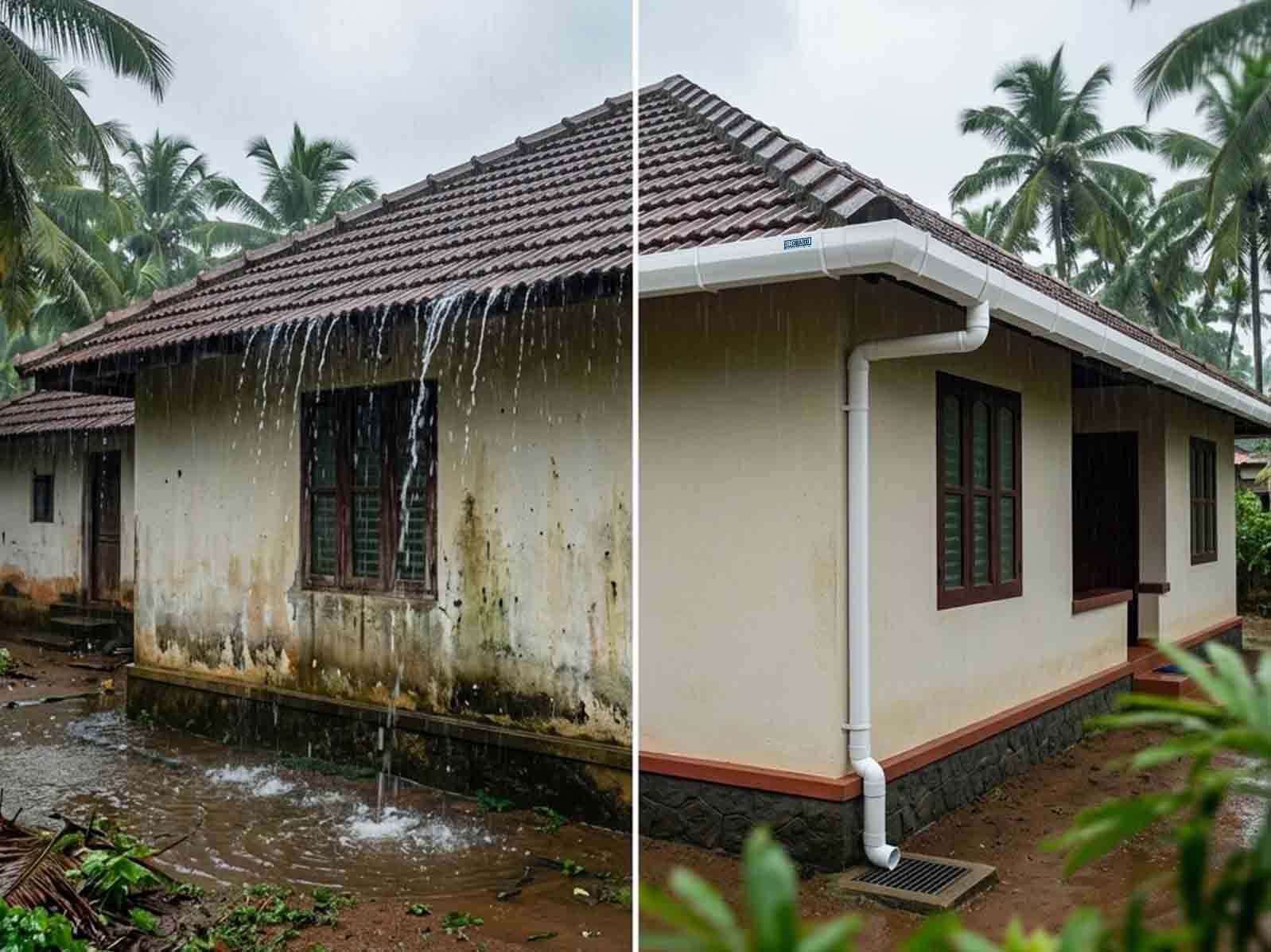
When rainwater is not properly drained from your roof, it overflows down the walls and pools around the foundation, causing wall dampness, peeling paint, foundation erosion, mould growth, and eventually structural cracks. In Kerala's heavy monsoon, this damage builds fast: a single roof can shed thousands of litres in one storm, and without a working gutter system, that water goes straight into your building instead of away from it.
Poor roof drainage rarely announces itself with a dramatic failure. It works quietly - a stain here, a damp patch there - until the repair bill arrives years later. Understanding exactly what goes wrong, and in what order, is the best reason to fix drainage before the next monsoon rather than after.
Here is what actually happens, stage by stage, when roof water has nowhere proper to go.
When roof water is not drained, it runs down the exterior walls repeatedly, causing dampness, peeling paint, efflorescence (white salt deposits), and eventually plaster deterioration. The wall is soaked again with every shower, and it never fully dries during Kerala's long monsoon.
Over time, this constant wetting breaks down the paint film and lets water penetrate hairline cracks in the plaster. Once water is inside the wall, it moves through to the interior - showing up as damp patches, bubbling paint, and a musty smell indoors.
A freshly painted home can start showing this damage within two or three monsoon seasons if drainage is poor.
Without proper drainage, roof water falls directly beside the building and saturates the soil around the foundation. Repeated saturation weakens the soil, increases pressure on the foundation, and can cause settlement and structural cracks.
This is the most expensive consequence and the least visible. The damage happens underground, so homeowners usually notice it only when cracks appear in walls or floors, or when doors and windows stop closing properly.
Foundation repair costs far more than a gutter system ever would - which is why redirecting water away from the base of the building matters more than any other drainage job.
Poor roof drainage leads to interior dampness, ceiling seepage, mould growth, and musty odours as water penetrates through walls and roof junctions. Moisture that enters the structure does not stay in one place - it spreads. Common interior signs include damp patches on ceilings and walls, bubbling or flaking interior paint, black mould in corners and around windows, and a persistent musty smell. In severe cases, moisture reaches electrical fittings, creating a safety risk. Mould is also a health issue, contributing to allergies and respiratory problems, especially for children and the elderly.
When water is not drained quickly, it lingers at the roof edge and in valleys, weakening roofing materials, soaking fascia boards, and increasing the risk of leaks. Fascia boards - the boards behind the gutter line - are especially vulnerable, rotting or degrading when constantly wet.
Standing water also shortens the lifespan of the roof covering and creates entry points for leaks at junctions and joints.
Uncontrolled roof runoff washes away soil, damages plants, erodes pathways, and creates standing water that breeds mosquitoes. A heavy roof discharge concentrated in one spot acts like a small waterfall, stripping garden beds and undermining paved areas.
Standing water around the house is not just a nuisance - in Kerala, it is a mosquito-breeding and health concern during the monsoon.
In Kerala's climate, poor-drainage damage accelerates because the state receives over 3000 mm of rain a year across two monsoons, with high humidity that prevents walls from drying between showers. Damage that might take years in a drier region can appear in a single wet season here.
The combination of rainfall intensity, sustained humidity, and - near the coast - salt-laden air means there is no recovery period. The building stays wet, so the deterioration is continuous rather than occasional.
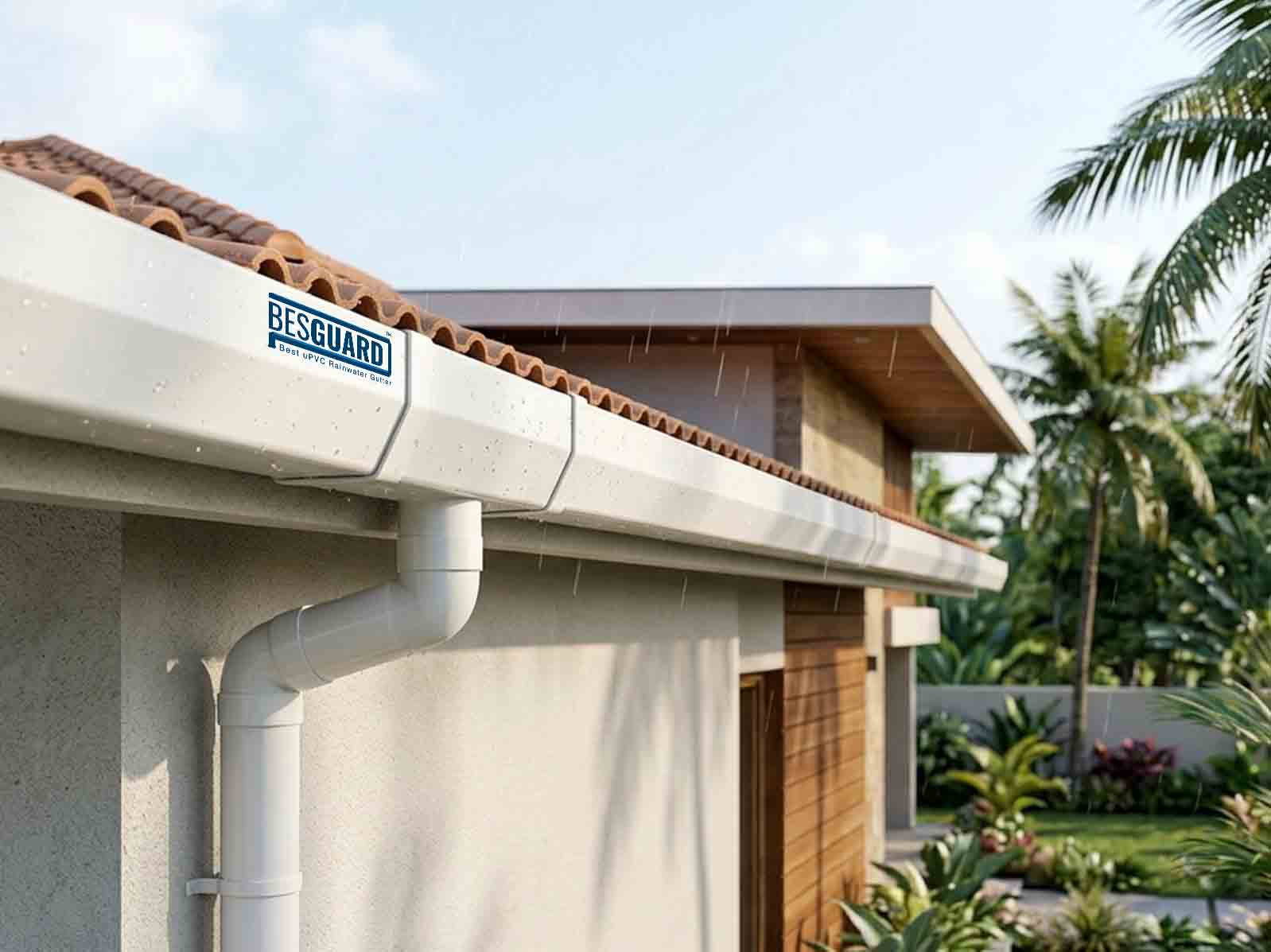
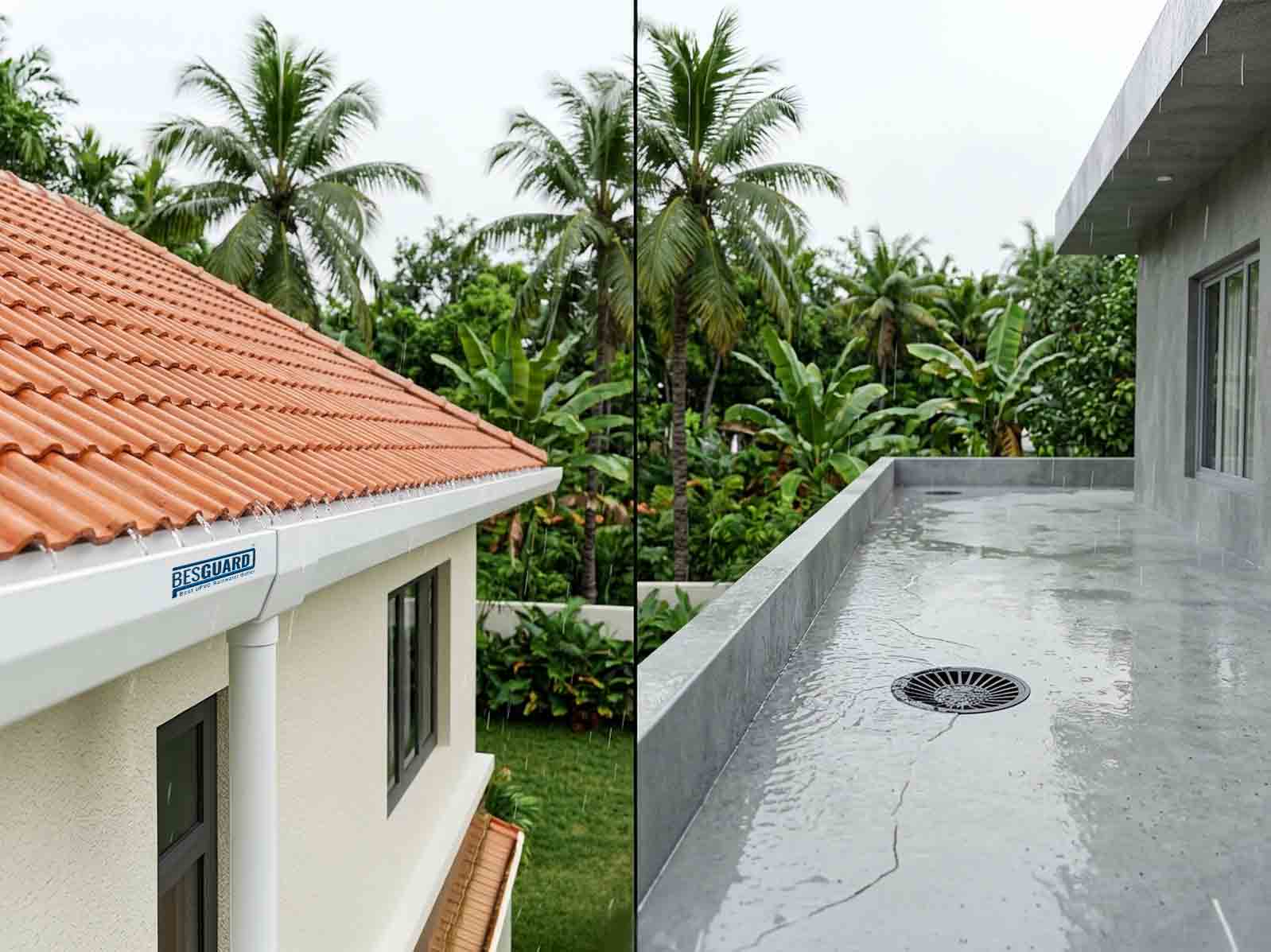
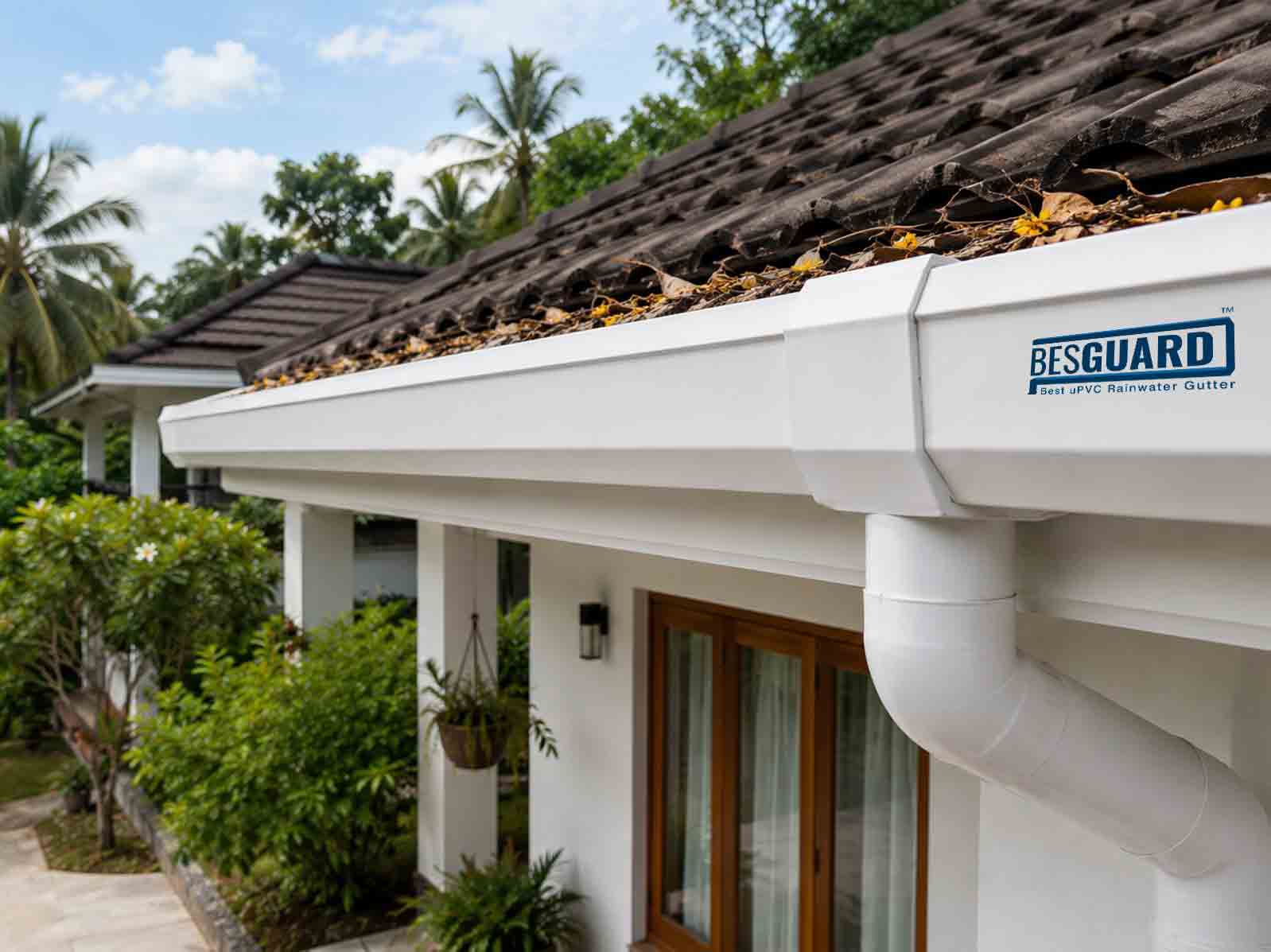
The most effective prevention is a properly sized rainwater gutter system that collects roof runoff and directs it, through downpipes, safely away from the building or into a rainwater harvesting system. The gutter intercepts the water at the roof edge before it can reach the walls or foundation.
For Kerala specifically, prevention means:
A gutter is far cheaper than the repairs that follow its absence. When rainwater is not properly drained from your roof, the damage moves through the whole building - walls, foundation, interior, roof, and surroundings - quietly and continuously. In Kerala's two-monsoon, high-humidity climate, it happens faster than most homeowners expect and costs far more to repair than to prevent.
A properly designed rainwater gutter system stops the problem at its source, catching roof runoff before it can reach the walls or foundation. Besguard's fortified uPVC gutters, in 165 mm and 225 mm profiles with IR-Rib reinforcement and a 10-year warranty, are engineered to handle Kerala's heaviest rainfall and protect your home for decades. The rain will come. The only question is whether it runs harmlessly away - or into your home.