
The countdown has officially ended. The India Meteorological Department (IMD) has tracking the steady advancement of the southwest monsoon across the Arabian Sea, placing all districts under a continuous yellow alert. Severe pre-monsoon squalls and heavy downpours have already been active across the state. With weather patterns indicating intense, wind-driven rainfall spells from late May through June, Kerala’s annual test of structural resilience is officially underway.
For homeowners, this seasonal shift brings a critical, time-sensitive question: Is your roof actually ready to withstand the sheer volume of a Kerala monsoon?
Every year, thousands of residents discover structural vulnerabilities too late - only after water begins dripping from the ceiling or staining expensive exterior walls. In our tropical climate, roof protection isn't a passive status; it requires active verification. If you haven't inspected your roof perimeter and rainwater management infrastructure within the last few weeks, your property could be exposed to preventable, high-cost water damage.
The 2026 monsoon carries unique challenges. In comparison, long-range forecasts project overall rainfall to sit within a manageable percentage of the Long Period Average. The onset window is characterized by intense, short-duration cloudbursts accompanied by gusty winds.
When hundreds of millimetres of water fall within a compressed timeframe, your roof changes from a sheltering shield into a high-volume water catchment. A standard 1,500-square-foot home can shed thousands of litres of water during a single hour of heavy rain.
If this water isn't captured and channelled away instantaneously, gravity will force it into the weakest links of your structure: plaster hairline cracks, porous concrete slabs, and joint separations.
You don't need to wait for an indoor flood to know your roofline is failing. Before catastrophic leaks occur, your building envelope exhibits subtle warning signs. Homeowners should look for these red flags immediately:
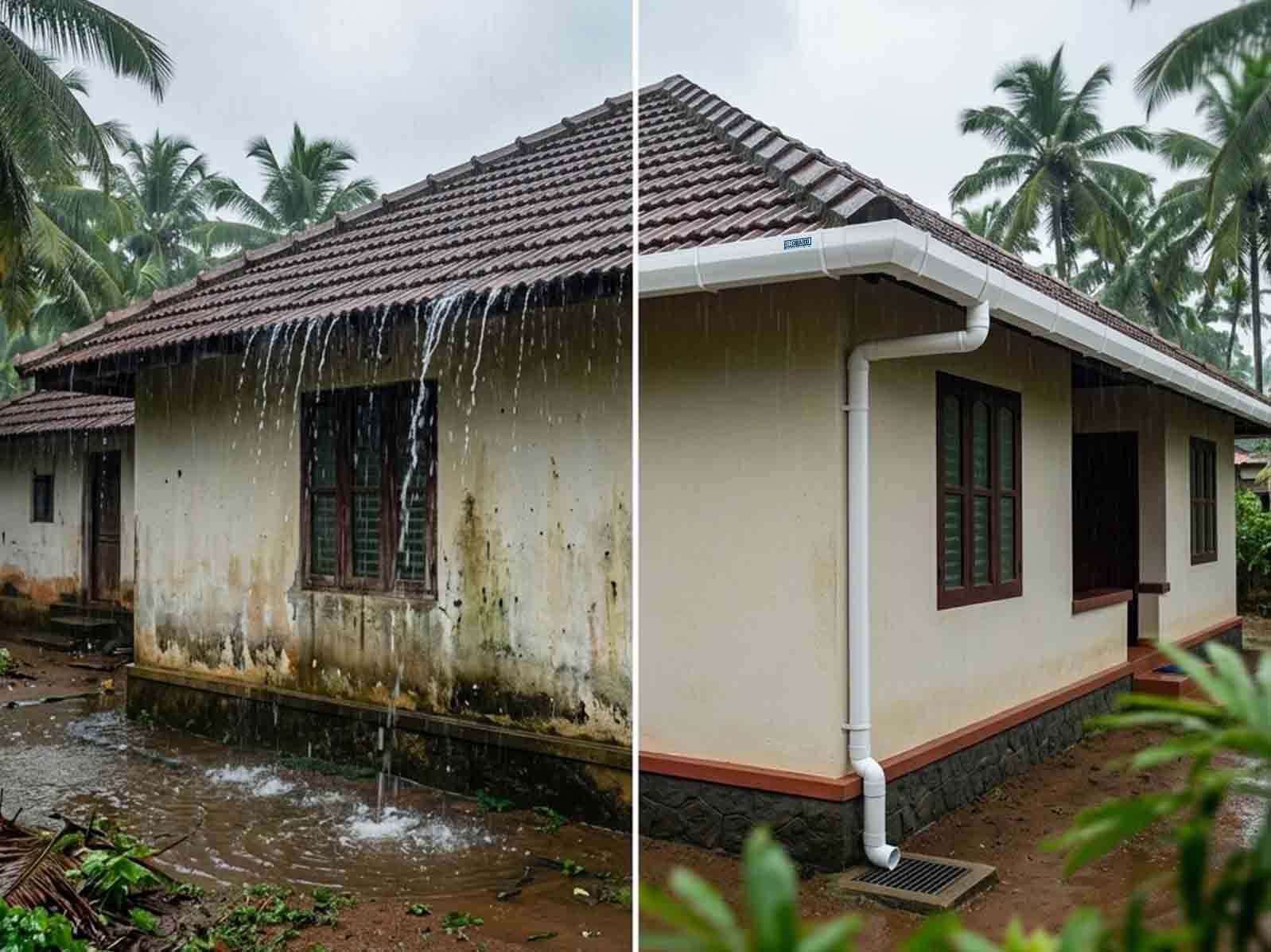
Walk around your property and inspect the plaster just underneath your roof eaves and fascia boards. Dark, damp streaks or peeling exterior paint indicate that water is overshooting your perimeter channels or leaking backward behind the roof trim.
In Kerala's humid environment, persistent water exposure quickly manifests as green algae or white, powdery salt bursts (efflorescence) on exterior brickwork. This is a definitive sign that rainwater is pooling rather than draining.
Look up at your gutter line. Do the channels form a perfectly straight, sloped trajectory toward the downspouts? If you notice gaps, bowing profiles, or loose brackets, the system will fail structurally when loaded with the immense weight of active rainfall.
When a roof fails during a heavy downpour, the culprit is rarely the roofing tile or the metal sheet itself. In over 80% of residential cases, the true catalyst is a compromised, blocked, or poorly engineered gutter network. Throughout the hot summer months, dry leaves, twigs, dust, and organic debris accumulate along the roof valleys. The initial monsoon showers sweep this material down into the drainage paths, creating tight, impermeable plugs at downspout junctions.
When a gutter chokes, the incoming water cannot escape. It builds up instantly, spilling over the rear edge directly into your rafters or dropping down in concentrated sheets that erode the soil around your home's foundation.
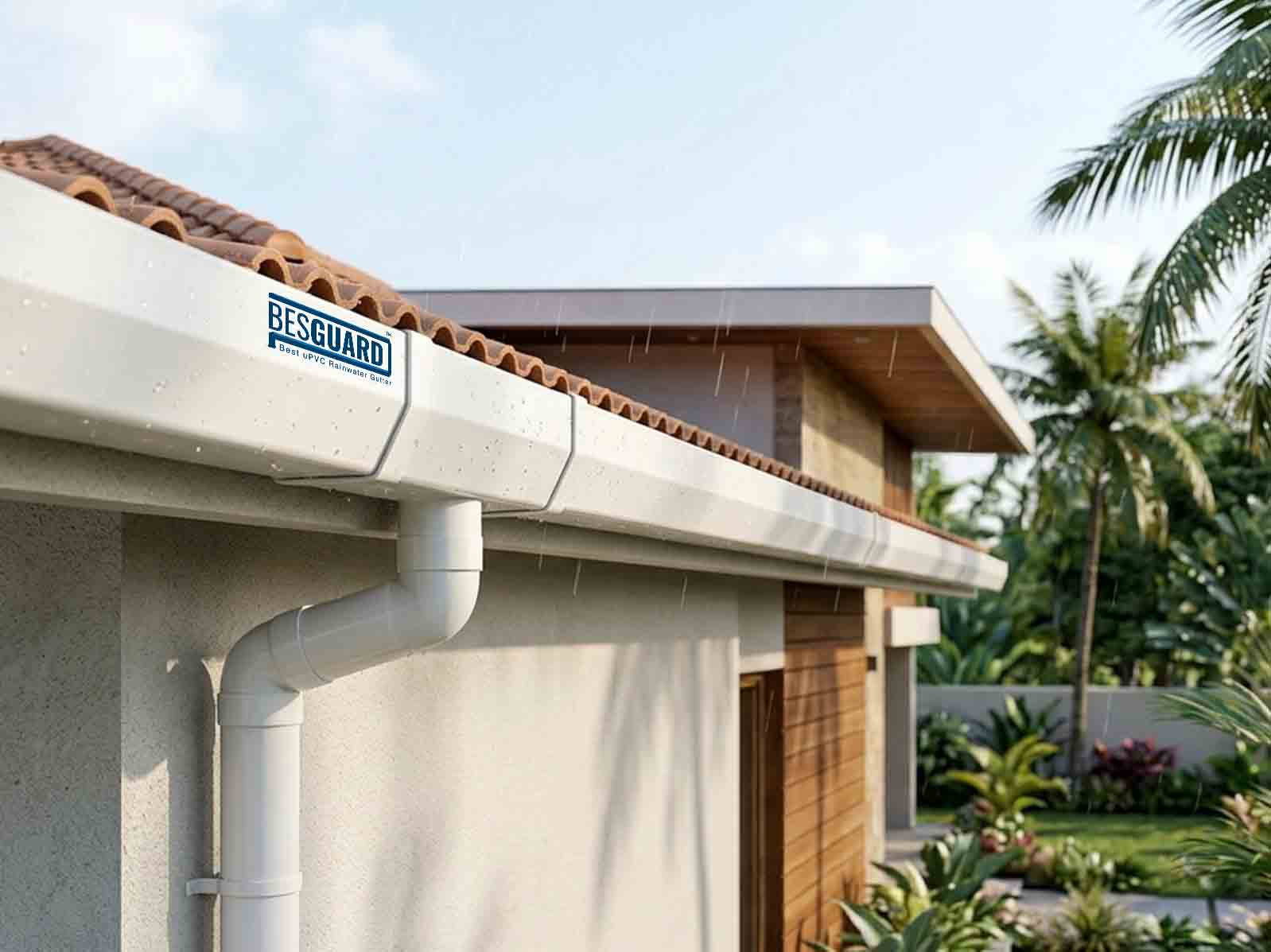
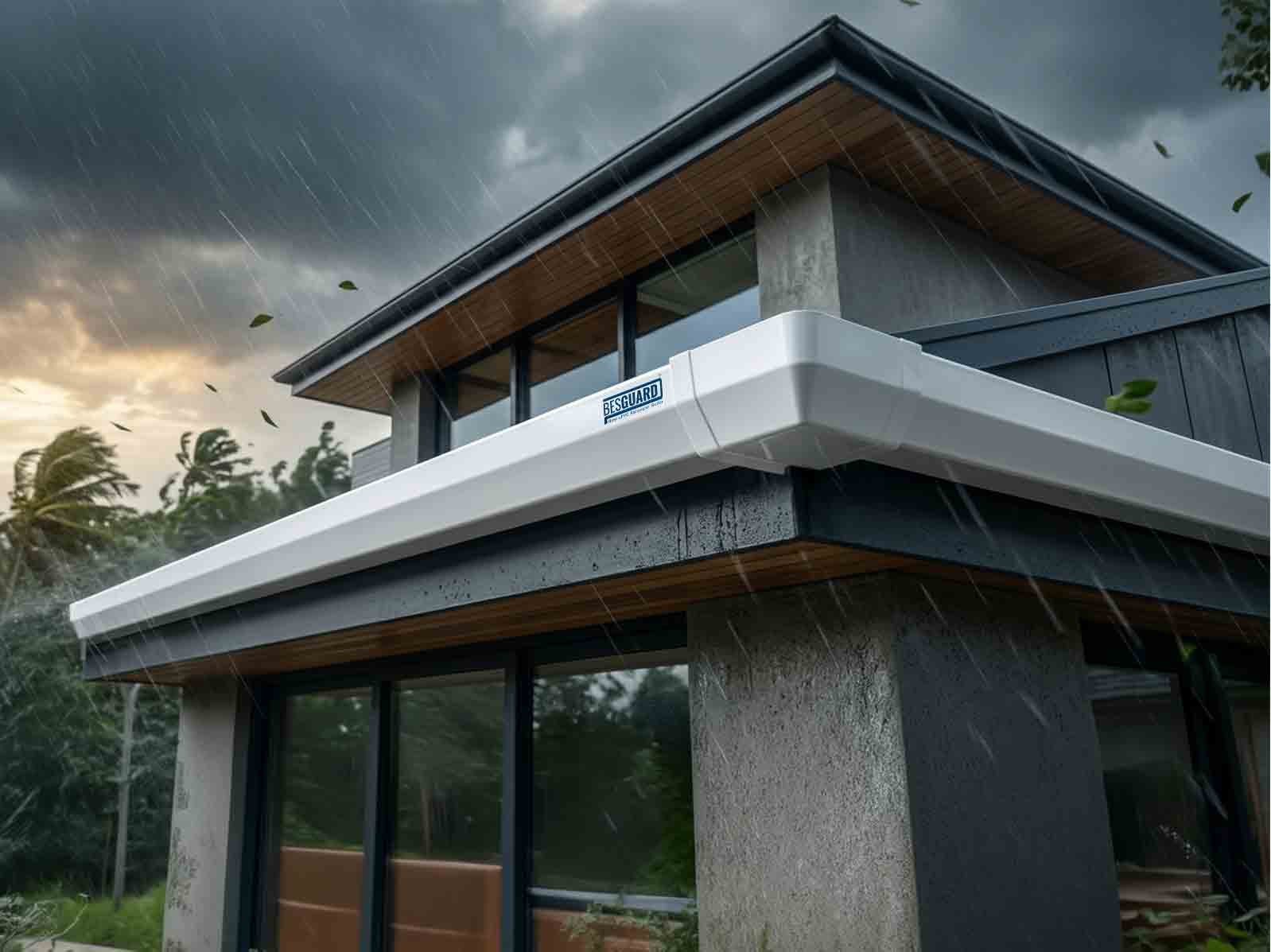
To handle intense weather patterns, modern sustainable architecture has transitioned away from cheap, narrow PVC channels. High-performance systems - such as the advanced uPVC rainwater gutters manufactured by Besguard - utilize an optimized trapezoidal design. This distinct profile features a wide outer mouth that captures wind-driven, sideways rain sheets, combined with a deep base that accelerates water flow velocity, ensuring the system never chokes or overflows during a storm.
To ensure your property remains entirely dry and structurally secure throughout the season, execute this comprehensive maintenance checklist before the next major rain band hits:
Remove all dead leaves, branches, and debris from the roof surface, valleys, and internal drainage areas. Ensure that tree branches overhanging your roofline are pruned back safely to prevent physical damage during high winds and to minimize leaf drop.
Examine your drainage brackets. Traditional gutters often sag under heavy loads because their external supports flex. If you are updating your infrastructure, prioritize systems built with an Internally Reinforced Rib (IR-Rib) design. These internal structural ribs provide the rigid support necessary to maintain perfect alignment under maximum water weight, without relying on clunky external metal brackets that rust and ruin your home’s architectural aesthetics.
Thermal expansion from the preceding summer heat can cause standard plastic gutter joints to split or crack. Check every union and end cap. Ensure your water management network features heavy-duty, rubber-sealed overlap joints that can absorb seasonal expansion and contraction without developing persistent leaks.
Ensure that downspouts are entirely clear of obstructions. Most importantly, verify where the water is discharging. Downspouts should never dump water directly at the base of your walls. They must connect seamlessly to a dedicated stormwater drain, a well-recharge unit, or an extended pipeline that moves the water completely away from your foundation footings.
|
Maintenance Focus |
Potential Risk If Ignored |
Long-Term Solution |
|
Roof Valleys & Surface |
Debris buildup causes water to pool and back-leak into ceilings. |
Clear all organic waste; prune overhanging tree lines. |
|
Gutter Capacity & Profile |
Shallow or round channels overflow, causing wall dampness. |
Upgrade to high-capacity trapezoidal uPVC profiles. |
|
Joint Structural Security |
Cracked or split joints drip water, rotting fascia boards. |
Deploy heavy-duty rubber-sealed overlap joints. |
|
Foundation Discharges |
Ground waterlogging causes foundation settlement and cracks. |
Route downspout lines into harvesting tanks or well-recharges. |
The rains are here, and the weather windows are closing rapidly. In home maintenance, an ounce of prevention is worth lakhs in structural repairs. Securing your home against the changing realities of our climate requires looking to your roofline and ensuring your drainage channels can handle whatever the elements throw their way. Don't wait for internal dampness, ruined paint, or sagging ceilings to alert you to a drainage problem. Take control of your property protection strategy right now.
Book a pre-monsoon gutter inspection today with a certified rainwater management professional, ensure your channels are clear, and give your family the peace of mind they deserve all winter long.