
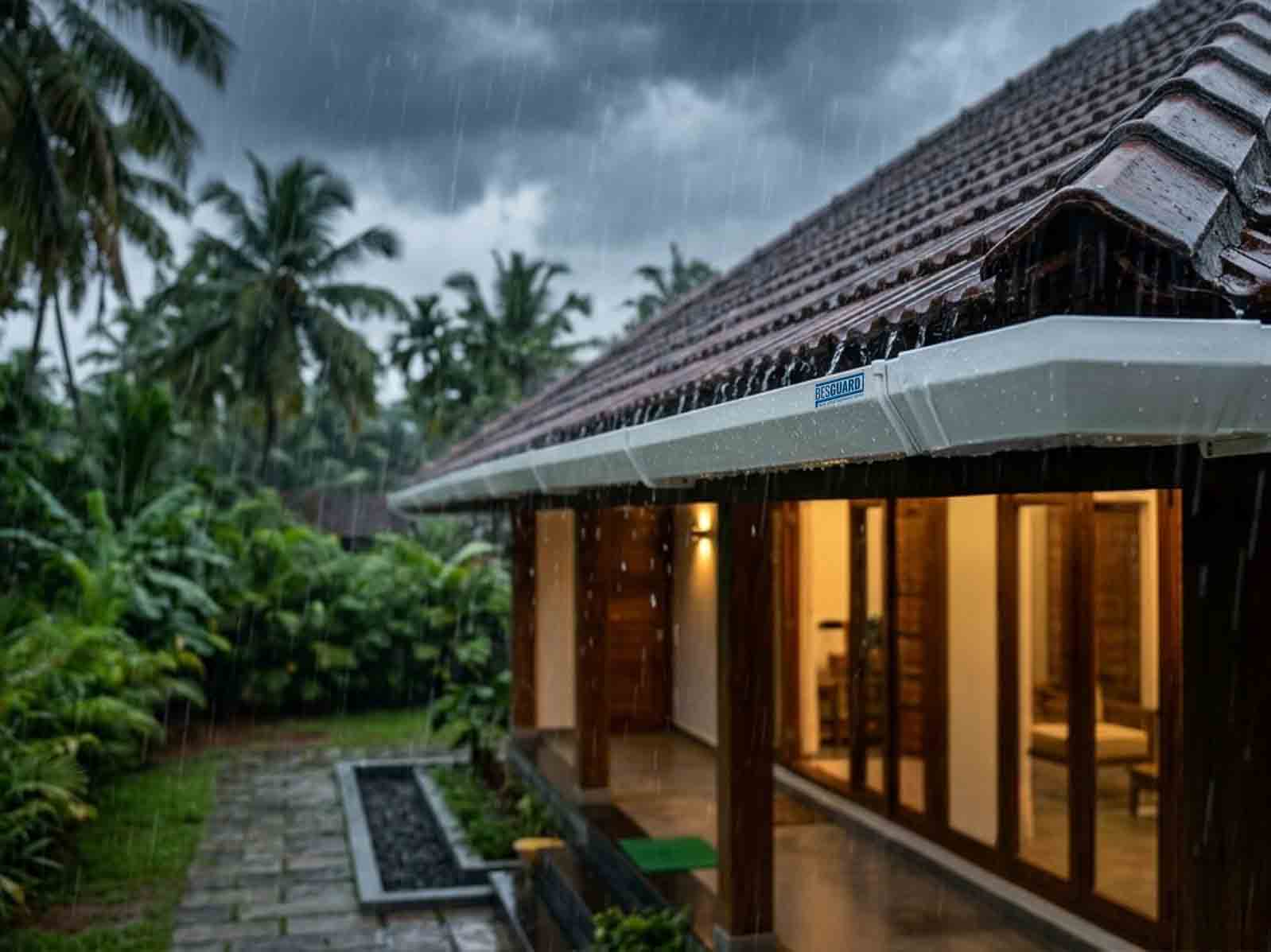
For decades, homes in Kerala were designed based on predictable weather patterns. Builders could estimate rainfall intensity, seasonal wind loads, and drainage requirements with reasonable accuracy. Today, those assumptions are rapidly becoming outdated.
Climate change is reshaping the monsoon. Short bursts of extremely heavy rainfall, stronger winds, flash flooding, and prolonged wet periods are becoming increasingly common across Kerala. As weather patterns evolve, architects, engineers, and homeowners face a critical challenge: designing homes that can withstand tomorrow's climate rather than yesterday's.
The future of construction is no longer just about aesthetics, luxury, or energy efficiency. It is about resilience. Monsoon-proof architecture is emerging as the new standard for protecting homes, families, and investments from increasingly unpredictable weather.
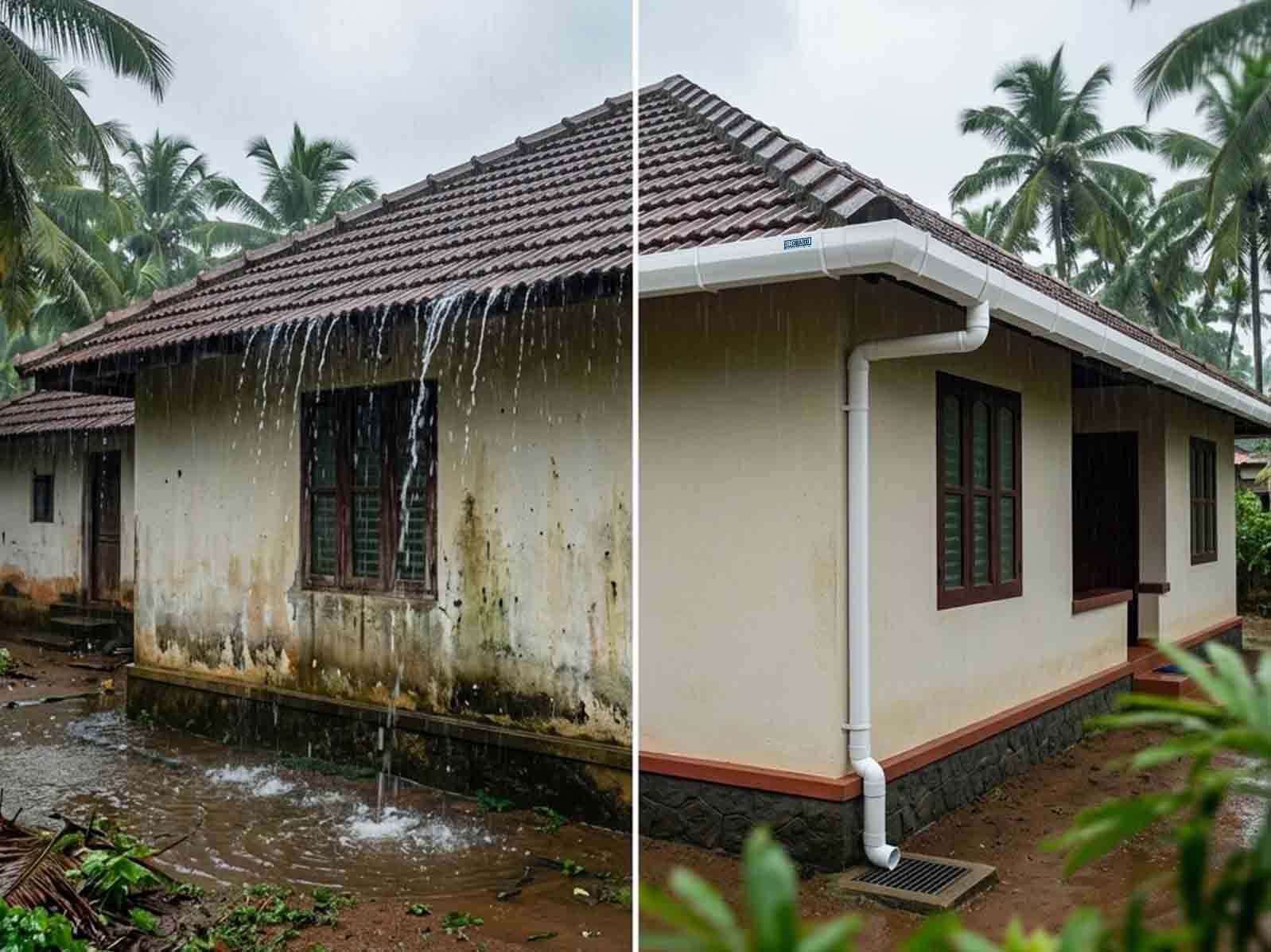
Many homes built over the last two decades were designed to handle average rainfall conditions. While these structures may perform adequately during normal weather, they often struggle during modern high-intensity storms.
Common problems include:
The problem is rarely the roof itself. More often, the issue lies in inadequate rainwater management systems that cannot handle sudden surges of water. When hundreds of litres of rainwater fall on a roof within minutes, every component of the drainage system is tested. Weak links quickly become expensive repair projects.
Future-ready homes are designed around one central idea:
Water must be controlled before it reaches vulnerable parts of the structure.
Modern monsoon-resistant architecture focuses on five critical elements:
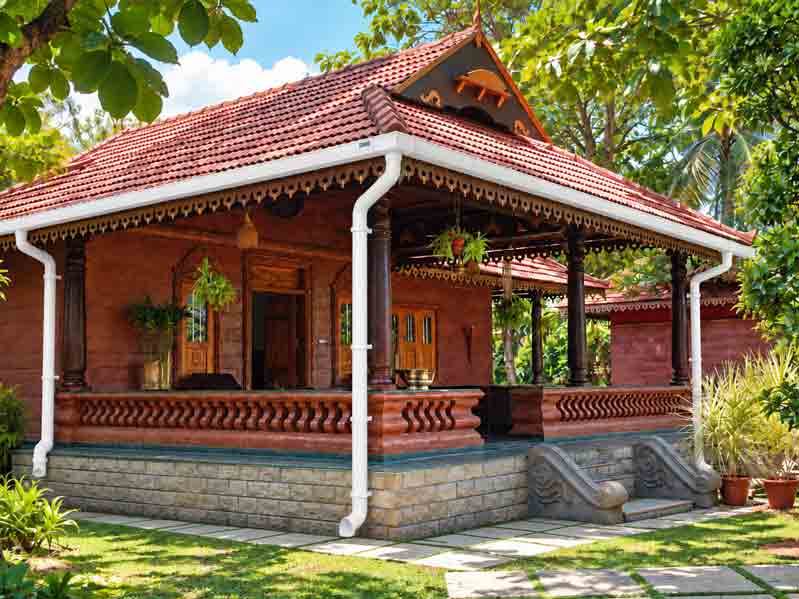
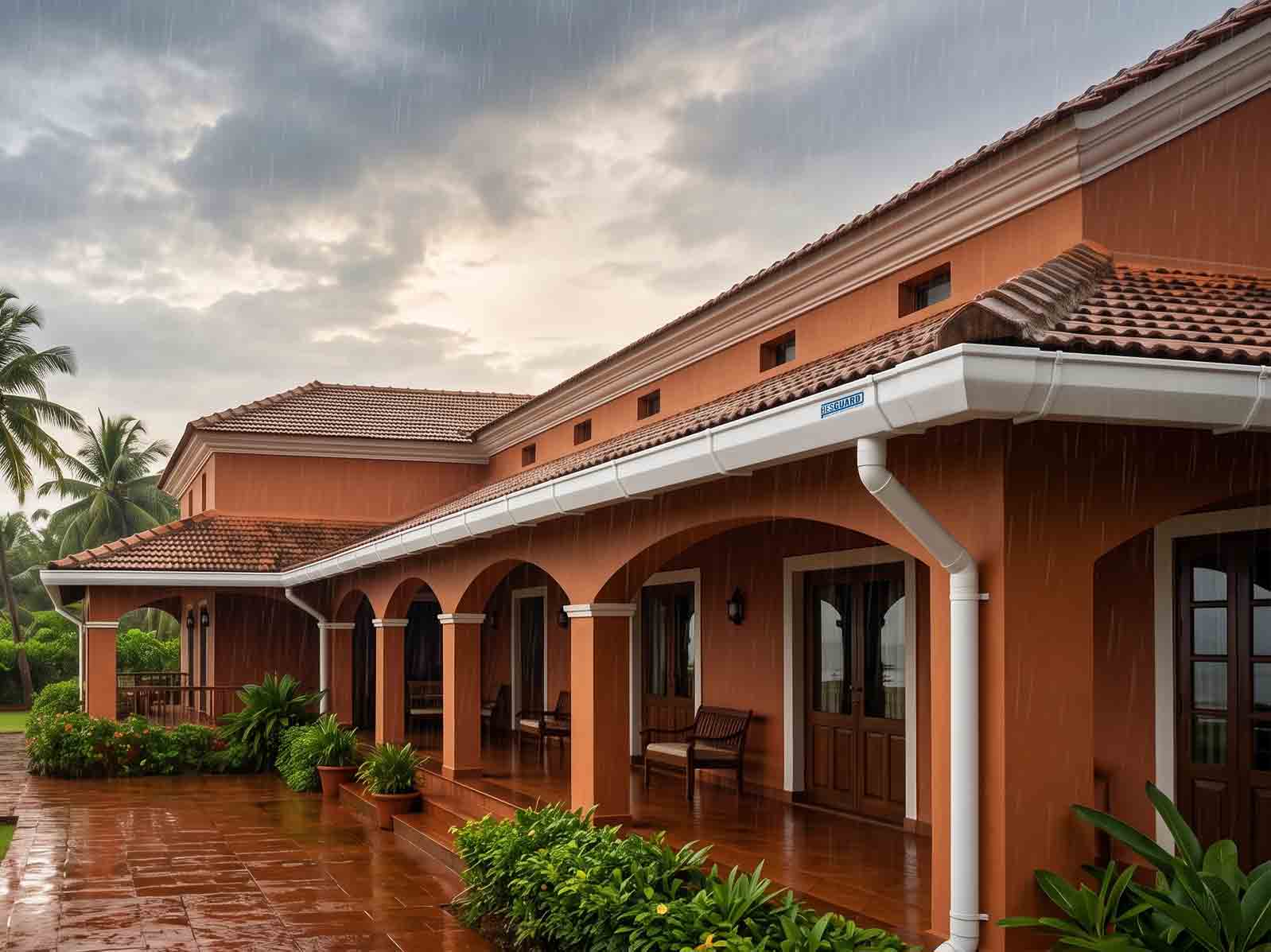
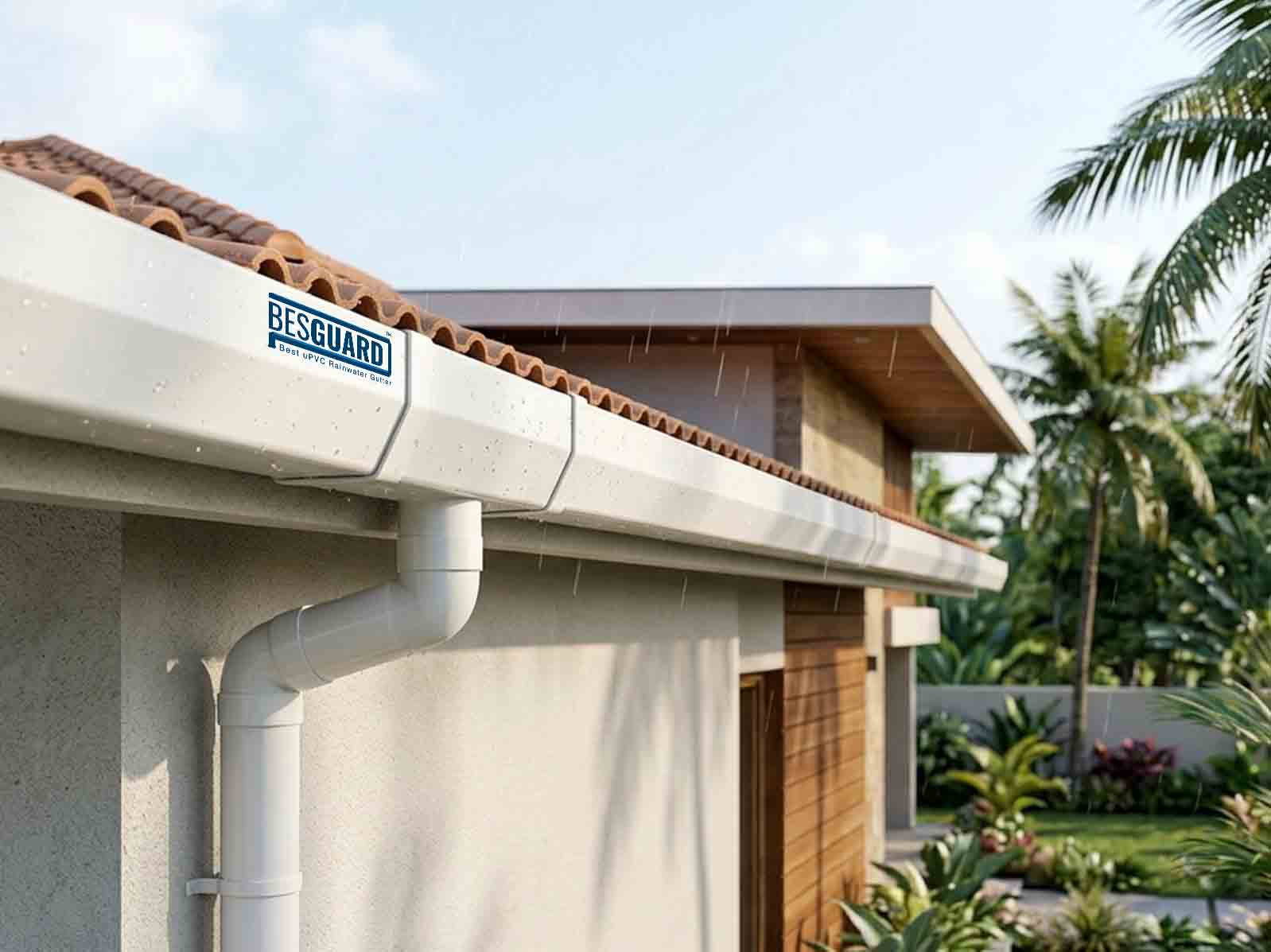
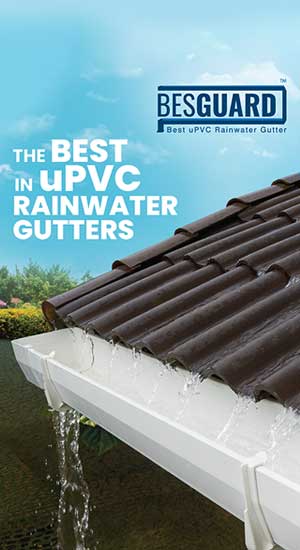
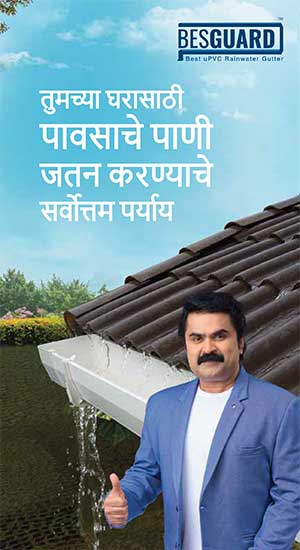
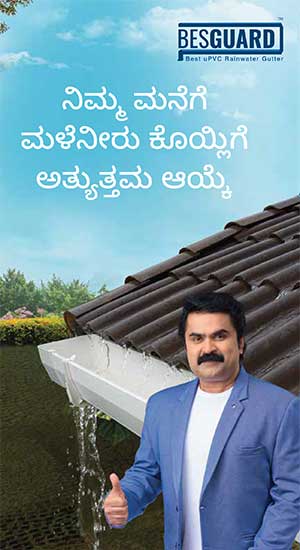
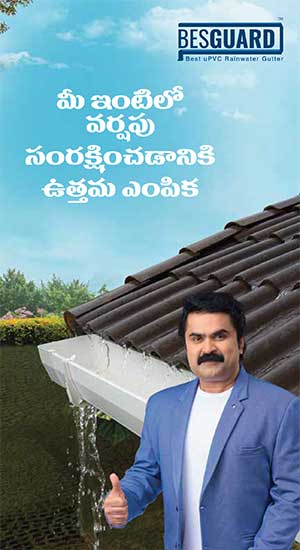
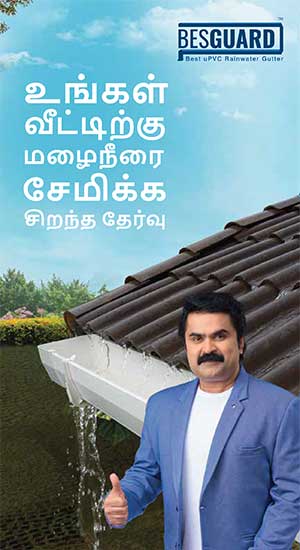
A roof acts as a giant rainwater collection surface. During heavy storms, thousands of litres of water must be captured and redirected immediately. Traditional narrow gutters often fail because they cannot process large water volumes quickly enough. Modern uPVC gutter systems use wider, deeper profiles that improve water flow and prevent overflow even during intense cloudbursts.
Future homes will not simply dispose of rainwater. Instead, they will harvest and store it for later use.
Rainwater harvesting systems help:
By integrating harvesting systems directly into building design, homeowners can transform heavy rainfall into a valuable resource.
Traditional plastic gutters often sag, crack, or warp over time. The future belongs to structurally reinforced gutter systems designed specifically for tropical climates.
Advanced systems feature:
These features help maintain long-term performance despite intense heat, heavy rainfall, and strong winds.
One of the biggest threats to a building is uncontrolled water accumulation around the foundation.
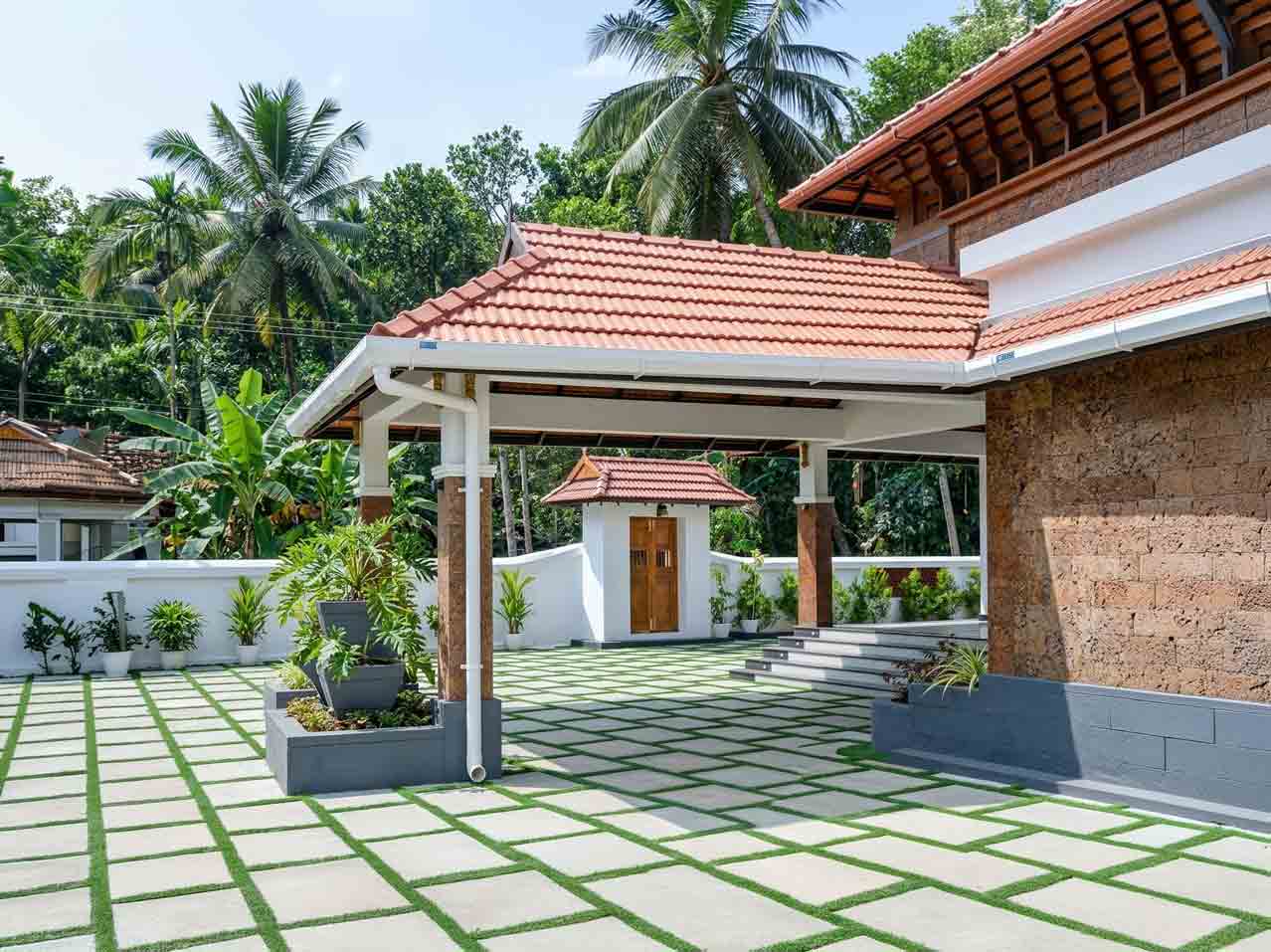
Modern monsoon-proof designs ensure that water is directed far away from structural footings through:
Protecting the foundation today prevents costly structural repairs tomorrow.
Architects are increasingly designing homes that actively respond to local weather conditions.
Examples include:
These design elements work together to reduce moisture intrusion and improve overall durability.
As rainfall intensity continues to increase, gutter performance becomes more important than ever.
A future-ready rainwater management system must be capable of handling:
This is why many modern architects and builders are shifting toward premium uPVC gutter systems such as those offered by Besguard.
Their engineered profiles provide higher water-carrying capacity while maintaining structural stability during extreme weather events.
Many homeowners assume that drainage systems are minor components of a building. In reality, they protect nearly every major structural element.
A failed gutter can lead to:
A relatively small investment in modern rainwater management can prevent repair costs running into lakhs of rupees.
The homes of tomorrow must be designed with climate resilience at their core. As Kerala experiences stronger monsoons and more extreme weather events, successful buildings will be those that efficiently capture, manage, and redirect water before it causes damage. Monsoon-proof architecture is no longer a luxury it is becoming a necessity. By combining intelligent design, rainwater harvesting, reinforced uPVC gutter systems, and advanced drainage planning, homeowners can build properties that remain safe, durable, and valuable for generations.
The future of home design in Kerala is not about resisting rain it is about managing it intelligently. As rainfall patterns become more unpredictable, investing in monsoon-proof architecture today can save homeowners from major structural problems tomorrow.
With durable rainwater management systems, efficient harvesting solutions, and high-capacity uPVC gutters, your home can be prepared for whatever the next monsoon brings.